More South Florida supermarkets are running on CO2 this year than five years ago, and the pace is accelerating. Retailers aren't switching because CO2 is trendy. Regulation, refrigerant cost, and long-term efficiency are driving the decision. Operators who don't understand the technology often end up frustrated with contractors treating CO2 like an oversized HFC system.
A CO2 refrigeration contractor Florida operators can actually trust needs experience specific to this equipment. General refrigeration background alone isn't enough. Here's what separates CO2 systems from everything else in a supermarket's mechanical room, and what to ask before hiring anyone to touch one.
Why CO2 Is Showing Up in More South Florida Stores
Two regulatory forces are driving the shift. EPA's AIM Act phasedown requires an 85% reduction in HFC production and consumption by 2036, squeezing supply and pushing prices up on the refrigerants most supermarkets have relied on for decades.
At the same time, EPA's GreenChill program has spent nearly two decades building industry momentum toward natural refrigerants, working directly with major grocery chains on certification and best practices. CO2 has essentially zero global warming potential compared to HFCs, making it the leading replacement candidate for new construction and major retrofits.
Cost plays a role too. CO2 itself is cheap and widely available, unlike HFCs facing shrinking supply under the phasedown. A CO2 rack avoids much of the price volatility starting to hit HFC-dependent stores hard.
What Actually Makes CO2 Different
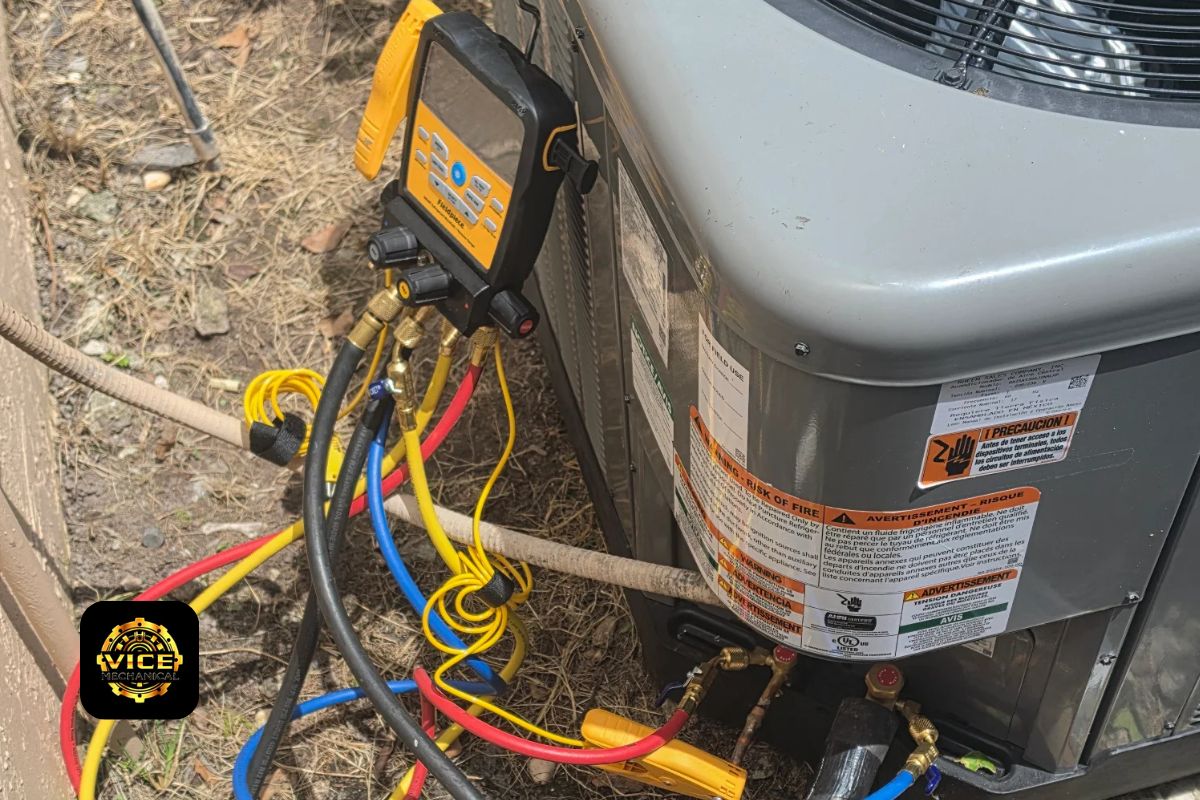
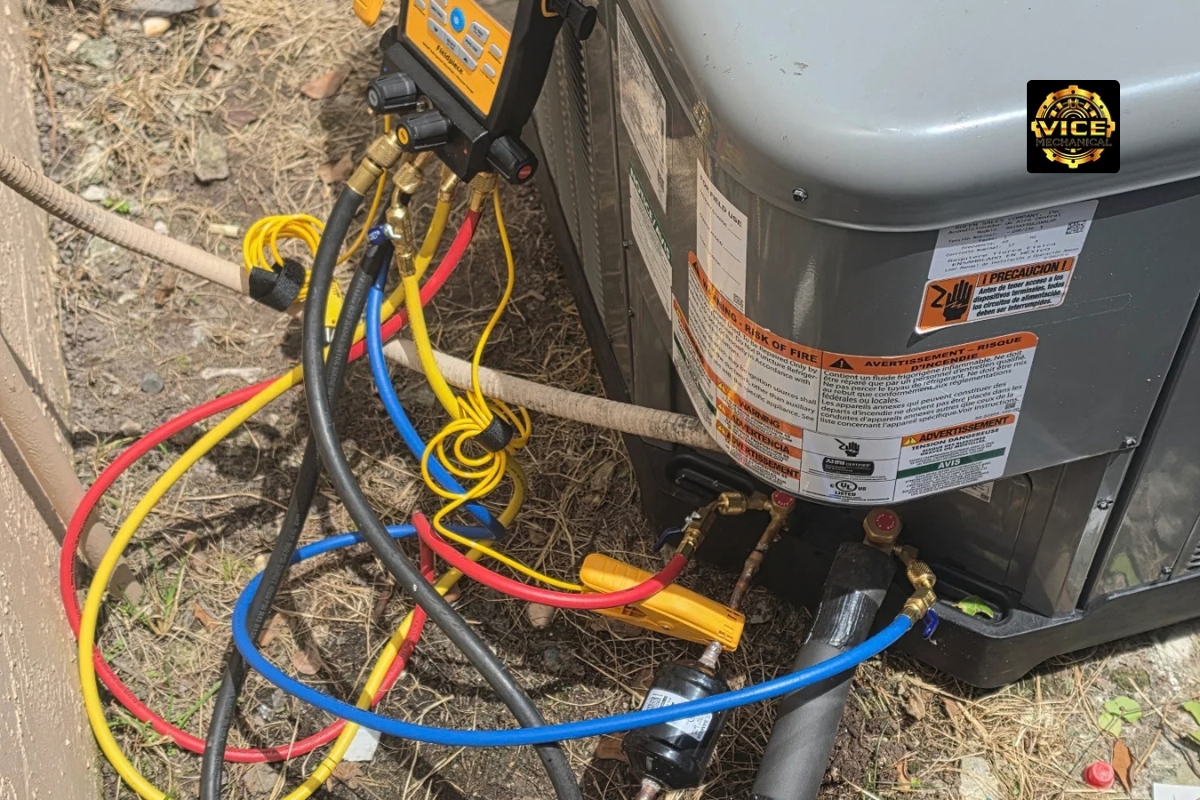
Traditional HFC systems operate at pressures a technician can work around with standard gauges and standard training. CO2 doesn't work that way. Transcritical CO2 systems routinely run high-side pressures several times greater than an HFC rack, and that gap changes everything about how the equipment gets designed, installed, and serviced.
Subcritical and transcritical operation add another layer most technicians never encounter. A transcritical system shifts operating modes as ambient temperature changes. South Florida's heat pushes CO2 racks into transcritical mode far more than a system in a cooler climate. Getting that transition tuned correctly separates an efficient rack from one burning excess energy every summer afternoon.
Parallel compression, ejectors, and gas coolers round out the differences. None of these components exist on a typical HFC rack. A technician unfamiliar with them ends up troubleshooting blind.
Installation differs just as much as service. A CO2 rack needs piping rated for its higher pressures, different insulation strategies, and controls tuned for two distinct operating modes instead of one steady state. Pricing a CO2 job like a standard HFC installation means underbidding the real scope or missing engineering time entirely.
The Specialized Skills a CO2 Rack Actually Requires
Here's a detail most operators don't expect. CO2 doesn't require EPA Section 608 certification the same way HFCs do, since that certification targets ozone-depleting substances and HFC substitutes specifically. Regulation simply hasn't caught up to this particular refrigerant.
Regulatory gaps don't make the work easier. Manufacturer-specific training and hands-on experience carry the real burden here, since no federal credential guarantees a technician actually knows how to service a transcritical rack. Ask directly what CO2-specific training a contractor's team has completed, not just what refrigerant licenses they hold.
Pressure safety matters just as much as refrigerant-handling skill. A CO2 leak in an enclosed equipment room can raise ambient CO2 concentration fast. OSHA sets the permissible exposure limit at 5,000 ppm as an eight-hour time-weighted average. Confined mechanical rooms need proper ventilation and leak detection, a check a generalist technician may skip.
New Construction Versus Retrofit
Timing the switch to CO2 matters as much as choosing the right contractor. New store construction is the easiest entry point, since the piping, controls, and mechanical room can be designed around CO2 from day one rather than adapted after the fact.
Retrofitting an existing HFC store is more complex. Higher-pressure piping often needs full replacement rather than reuse, and mechanical room space designed for HFC equipment doesn't always accommodate a CO2 rack's additional components without modification. A contractor experienced in retrofits can assess whether a specific store's infrastructure supports the switch or whether a full remodel makes more financial sense.
Remodel cycles offer a natural window. Stores already planning a refrigeration overhaul for other reasons can fold a CO2 conversion into that project at a fraction of the cost of a standalone retrofit later.
What to Ask Before Hiring a CO2 Refrigeration Contractor
A few questions separate a contractor who understands CO2 from one who's learning on your equipment:
- How many transcritical CO2 racks has your team commissioned or serviced, specifically in South Florida's climate?
- What manufacturer-specific training has your team completed for the control systems installed on our particular rack?
- How do you handle high-side pressure relief events, and what's your hands-on experience with parallel compression?
- Can you walk through exactly how your team tunes a system for strong high-ambient-temperature performance year-round?
- What's your realistic response time for a rack down, given the full inventory risk sitting at stake?
A rack refrigeration service South Florida operators trust should answer every one of these without hesitation. Vague answers usually mean the contractor's CO2 experience runs thinner than their sales pitch suggests.
Common Issues CO2 Rack Operators Run Into
High ambient temperature drives most CO2-specific problems South Florida operators see. A rack not tuned for the transcritical-to-subcritical transition wastes energy every time outdoor temperature climbs, and this happens for months at a stretch here. Maintenance built around CO2 service intervals catches tuning drift before it shows up on an energy bill.
Relief valve activation during extreme heat catches some operators off guard the first summer after installation. It's a normal safety response built into the system design, not necessarily a malfunction. Confirming which one it is takes a technician who knows the difference.
Parallel compression adds more components that can fail compared to a simpler subcritical system. More moving parts mean more monitoring points. A maintenance plan built around HFC service intervals usually needs adjustment for CO2 equipment.
Refrigerant charge behaves differently too. CO2's high volumetric cooling capacity generally means a smaller physical charge than an equivalent HFC rack needs, which sounds like an advantage until a leak happens. A small percentage loss on a pressurized system still releases gas fast, and a technician unfamiliar with CO2 charge dynamics can misjudge leak severity on a first call.
Vice Mechanical's CO2 Experience
Pedro Javier Pereira Jr. brings hands-on CO2 rack commissioning experience from national retail buildout work, including large-format grocery projects. His background covers both traditional refrigerants and advanced CO2 (R-744) systems, a rare combination among South Florida contractors.
Vice Mechanical works with supermarket and grocery operators across Davie, Fort Lauderdale, and the broader Broward service area on CO2 rack start-ups, troubleshooting, and ongoing service. Our team also handles broader commercial refrigeration for stores running mixed equipment, from walk-in coolers to full transcritical racks.
Call (786) 714-5586 or request service online to discuss a CO2 system, whether it's a new installation, a retrofit, or a rack that needs a technician who actually understands the equipment.
Frequently Asked Questions
Is CO2 refrigeration actually better than HFC for a South Florida supermarket?
It depends on store size, budget, and timeline. CO2 offers lower long-term refrigerant costs and regulatory stability. Upfront installation cost runs higher, and high-ambient climates need careful system tuning to perform efficiently.
Do CO2 systems need EPA 608 certified technicians?
Not in the same way HFC systems do, since CO2 falls outside the substances covered by that certification. Manufacturer-specific training matters more for CO2 work than the federal refrigerant credential does.
Why does South Florida heat affect CO2 systems more than other climates?
Transcritical CO2 systems shift operating modes based on ambient temperature. South Florida's extended heat pushes racks into the less efficient transcritical mode more often than cooler regions experience.
How is a CO2 rack different from a standard HFC rack to service?
Higher operating pressures, additional components like parallel compression and gas coolers, and different safety considerations around confined-space CO2 concentration all separate the two systems substantially.
Should an existing HFC supermarket consider retrofitting to CO2?
Retrofit timing depends on equipment age, refrigerant costs under the HFC phasedown, and remodel plans already on the calendar. A CO2-experienced contractor can model the cost comparison for a specific store.