A walk-in cooler doesn't fail for one reason. Compressors wear out. Refrigerant leaks slow-drain a system over months. Control boards fry from a single power surge. By the time the box starts running warm, one of six or seven possible culprits is usually already well past the point of a quick fix.
Walk-in cooler repair in Broward has a rhythm to it. Certain failure types show up again and again on service calls across Davie, Fort Lauderdale, and the rest of the county. Knowing which one you're facing changes everything about how fast it gets fixed and what it costs. Below is a rundown of the most common causes, what separates a same-day repair from a multi-day headache, and what to look for in the company you call.
What's Actually Killing Your Walk-In Cooler
Six causes account for most commercial refrigeration repair calls Broward operators make. Some are quick fixes. Others need parts on order and a technician who knows exactly what to test before touching anything.
1. Compressor Failure
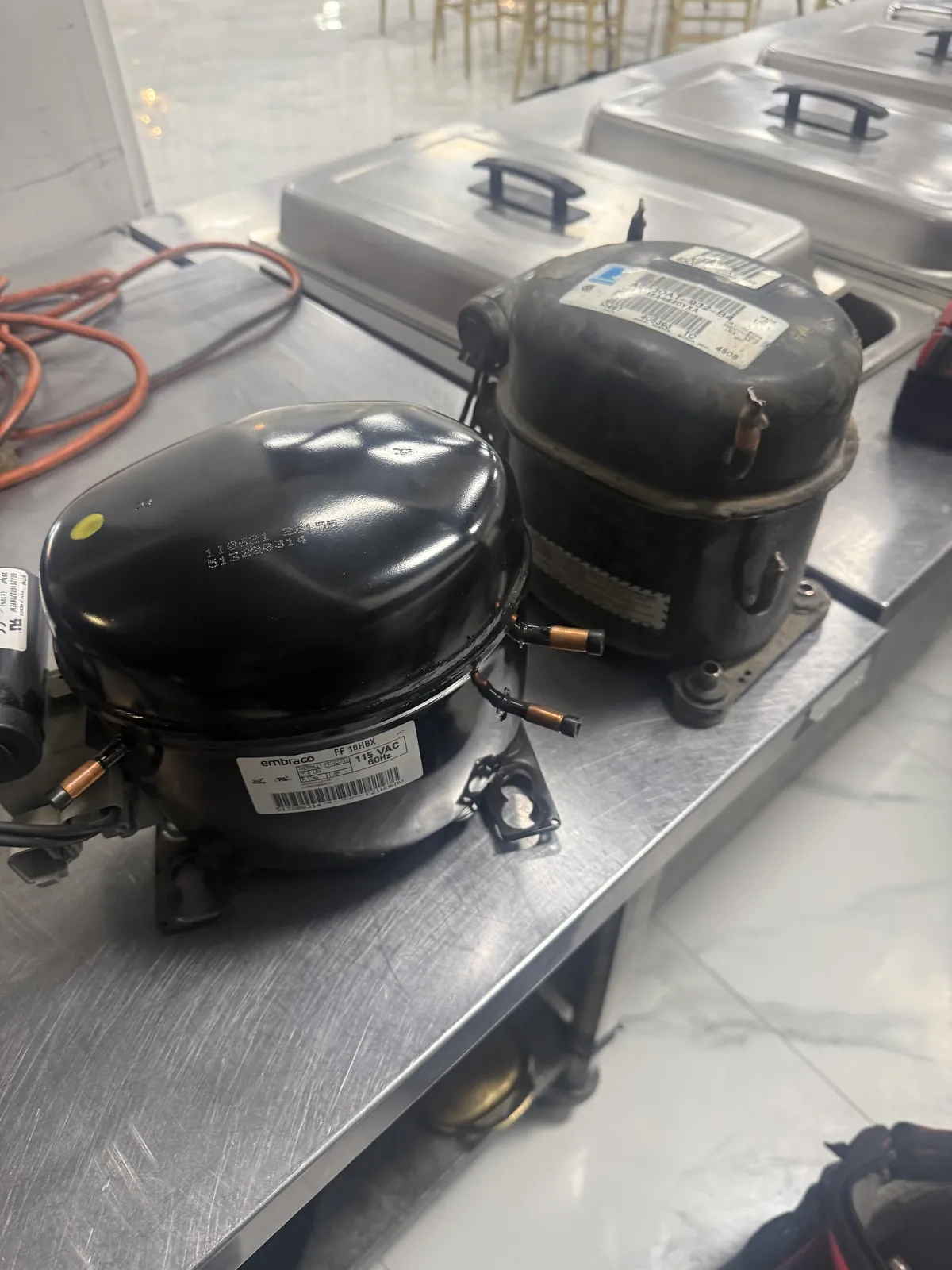
The compressor is the heart of the system, and it's also the most expensive thing to replace. Hard starting, loud clicking before shutdown, short cycling, and a tripped breaker on startup all point toward compressor trouble.
Sometimes the compressor itself failed. Just as often, something else is forcing it to work outside its design limits: a bad start capacitor, a failing contactor, or low refrigerant charge. A technician needs to isolate the real cause before recommending a replacement. Swapping a compressor without fixing what killed it just sets up the new one to fail the same way.
Age matters too. A compressor running well past its expected service life costs more to keep patching than replacing outright, especially once repair calls start stacking up within the same year. Tracking the repair history on a specific unit helps a technician spot that pattern faster than an operator juggling day-to-day operations ever could.
2. Refrigerant Leaks
A system running low on refrigerant doesn't fail all at once. Capacity drops gradually, cycles run longer, and eventually the box can't hold temperature at all. Simply adding refrigerant without finding the leak isn't a fix. For most commercial systems, doing that is against federal law.
EPA Section 608 of the Clean Air Act requires certified technicians for refrigerant work. Appliances leaking above certain thresholds need an actual repair, not just a recharge. A visit that only tops off refrigerant without locating the leak wastes money, since the system just leaks out again within weeks.
Common leak points on a walk-in cooler include brazed joints, Schrader valves, and the evaporator coil itself, especially on older systems where vibration has worked a fitting loose over years of operation. Electronic leak detectors and UV dye both help pinpoint the exact spot, which matters more than it sounds, since guessing at a repair location wastes both refrigerant and labor.
3. Electrical and Control Failures
South Florida's humidity and lightning-heavy storm season are hard on electrical components. Contactors weld shut. Relays fail. Control boards corrode, and wiring insulation breaks down faster near coastal salt air. Any of these can take a walk-in cooler offline instantly. There's no gradual warning the way a refrigerant leak gives.
Electrical diagnostics aren't a DIY repair category. Working inside an energized control panel carries real shock and arc-flash risk, which is exactly why OSHA's Control of Hazardous Energy standard requires proper lockout and de-energization procedures before anyone services equipment like this. Leave this work to a licensed technician with the right meters and training.
Surge protection helps, but it isn't a complete fix on its own. Older wiring and aging contactors fail eventually regardless of how clean the incoming power is, which is why a technician checking amperage draw and connection integrity during routine visits catches problems long before a full shutdown forces the issue.
4. Dirty or Blocked Condenser Coils
A condenser buried in grease, dust, or debris can't reject heat properly, forcing the compressor to strain to compensate. Guidance from the U.S. Department of Energy points to coil buildup as a direct driver of poor temperature regulation, making it one of the most preventable causes on this list.
Left unaddressed long enough, a chronically dirty coil doesn't just waste energy. Compressor life shortens, and the problem eventually turns into the compressor failure described above. Regular cleaning is cheap. Replacing a compressor is not.
5. Door Seals and Gasket Wear
A torn or warped gasket lets warm, humid air flood the box on every door swing. Sounds minor, but constant infiltration forces the compressor to run far more than it should, and it accelerates every other problem on this list by keeping the system under continuous load.
Gasket replacement ranks among the cheapest repairs on a walk-in cooler, yet it often gets missed during cleaning. Check the corners first, since gaskets tear and lose their seal there earliest.
6. Evaporator Icing and Defrost Failures
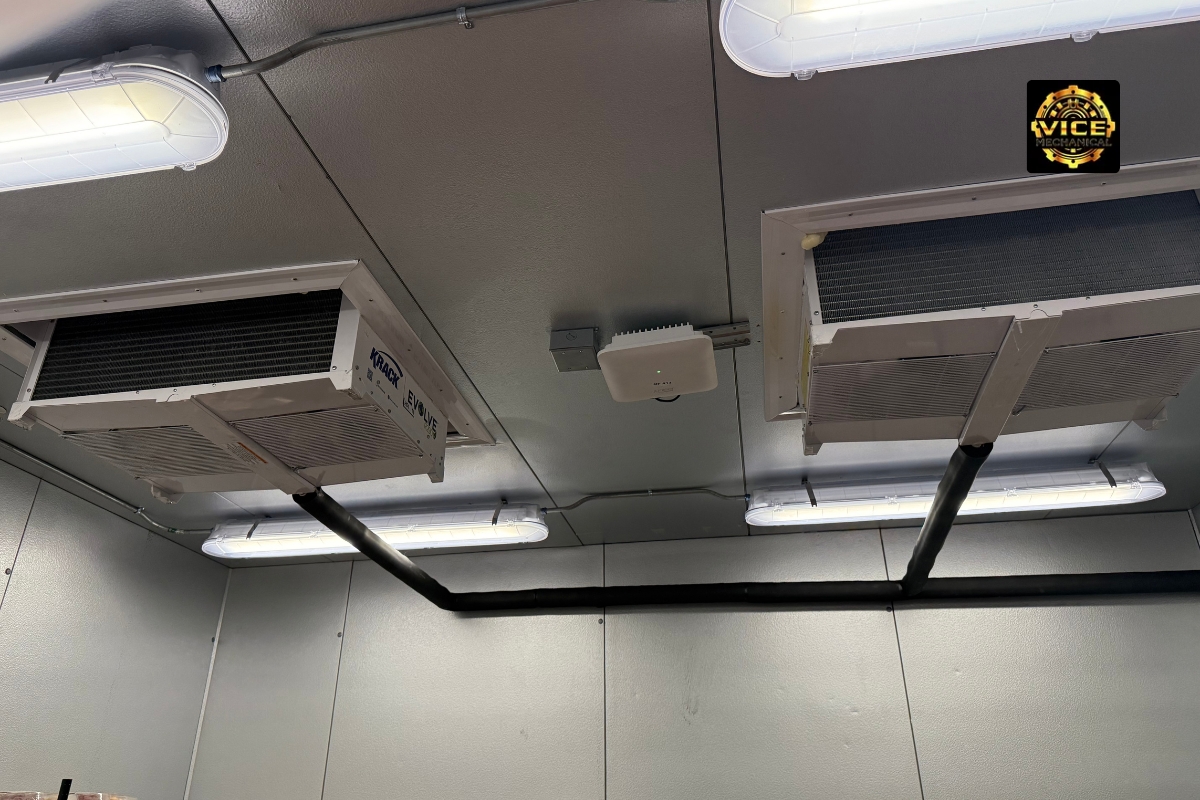
Ice building up on the evaporator coil blocks airflow and can eventually stop cooling entirely. Most of the time, this points to a failed defrost heater, a bad defrost timer or control board, or a drain line that's frozen shut and backing water up into the unit.
Defrost system failures often get misdiagnosed as refrigerant problems, since both produce a warm box and reduced airflow. Checking the defrost cycle first saves an operator from paying for a leak search that was never needed.
A frozen drain line deserves its own mention here, since it's one of the sneakier causes on this list. Water from normal defrost cycles is supposed to drain away cleanly, but a line that freezes partway through backs up, refreezes inside the cabinet, and can eventually block airflow across the whole evaporator coil.
What Fast Repair Actually Looks Like
Speed on a walk-in cooler repair call comes down to three things. An accurate diagnosis on the first visit matters most, followed by common parts already on the truck and a technician who has seen the specific failure before. Guessing wastes the one resource an operator can't get back during a breakdown: time before inventory loss becomes a real problem.
A properly run diagnostic starts with pressures and temperatures, not assumptions. Compressor amperage draw, superheat and subcooling readings, and a visual check of the electrical components tell a technician almost everything needed to confirm the cause. None of that requires guesswork or a parts-cannon approach.
Federal food safety guidance requires cold-holding foods at 41°F or below. Every hour a walk-in cooler sits above that line puts real inventory at risk, and that urgency is exactly why response time matters as much as technical skill when choosing a walk-in cooler repair Broward operators can count on.
How to Choose a Walk-In Cooler Repair Company in Broward
Not every HVAC company handles commercial refrigeration repair well. Gaps in that experience show up fast on a walk-in cooler call. A few things worth checking before you hire anyone:
- Confirm the technician holds a valid Florida contractor license and current EPA 608 refrigerant certification, since both are legally required for this work.
- Ask whether the company specializes in commercial refrigeration specifically, not residential air conditioning with refrigeration as an afterthought.
- Look for 24/7 emergency availability, since compressor and electrical failures rarely happen during convenient business hours.
- Ask what diagnostic process they follow before quoting a repair. Skipping straight to a price without testing pressures means guessing.
Vice Mechanical is a Florida Certified Air Conditioning Contractor (License #CAC1824947) built around commercial refrigeration for supermarkets, restaurants, and cold storage operators. We serve Davie, Fort Lauderdale, and the broader Broward service area. Walk-in cooler repair Broward operators call us for always starts with an actual diagnostic, never a guess.
Preventing the Next Breakdown
Every cause on this list gets cheaper to manage with regular maintenance instead of waiting for a breakdown. Coil cleaning catches problem four before it becomes problem one. Gasket checks catch problem five before it accelerates everything else on the system.
A commercial refrigeration maintenance plan covers exactly this kind of preventive work on a set schedule. It's the single biggest lever an operator has for cutting emergency repair calls. Readers who want to troubleshoot a specific symptom before calling can check our guides on why a walk-in cooler stops cooling and why coolers struggle to hold temperature in summer heat.
Call (786) 714-5586 or request service online for same-day walk-in cooler repair across Broward County.
Emergency Repair or Scheduled Visit?
Not every symptom on this list needs a technician on-site within the hour. Knowing the difference saves money on after-hours rates and helps prioritize the calls that genuinely can't wait.
A box that's completely stopped cooling, with product temperature climbing fast, qualifies as an emergency every time. So does any sign of an electrical failure: burning smells, sparking, or a breaker that won't stay reset. Both put inventory and safety at risk on a short timeline.
A slow temperature drift, a worn gasket, or a coil overdue for cleaning can usually wait for the next available appointment instead of triggering an emergency call. Catching these early is what matters, before they turn into the compressor and electrical failures that require urgent response. That's the entire logic behind scheduled maintenance: it keeps small problems from becoming 2 a.m. emergencies.
Frequently Asked Questions
How much does walk-in cooler repair cost in Broward?
Cost depends entirely on the cause. A gasket replacement runs far less than a compressor swap or a refrigerant leak search and repair. Request a quote once a technician has confirmed the actual problem, not before.
How fast can a walk-in cooler repair company reach me in Broward?
Response time varies by company. Same-day walk-in cooler repair in Broward is standard at Vice Mechanical, with 24/7 emergency service across Davie, Fort Lauderdale, and the surrounding area, since compressor and electrical failures don't wait for business hours.
Should I repair or replace an aging walk-in cooler compressor?
Age, refrigerant type, and the repair cost relative to a new unit all factor into that decision. A technician who diagnoses the root cause gives the most reliable answer for a specific system.
Does a repair company need to be licensed for walk-in cooler work?
Florida requires a certified air conditioning contractor license for this work. Federal law separately requires EPA 608 certification for anyone handling refrigerant.
What's the difference between a refrigerant recharge and an actual repair?
A recharge just adds refrigerant without finding out why the system lost it. An actual repair locates and fixes the leak, the legally required approach under EPA rules and the only way to stop the failure from repeating.