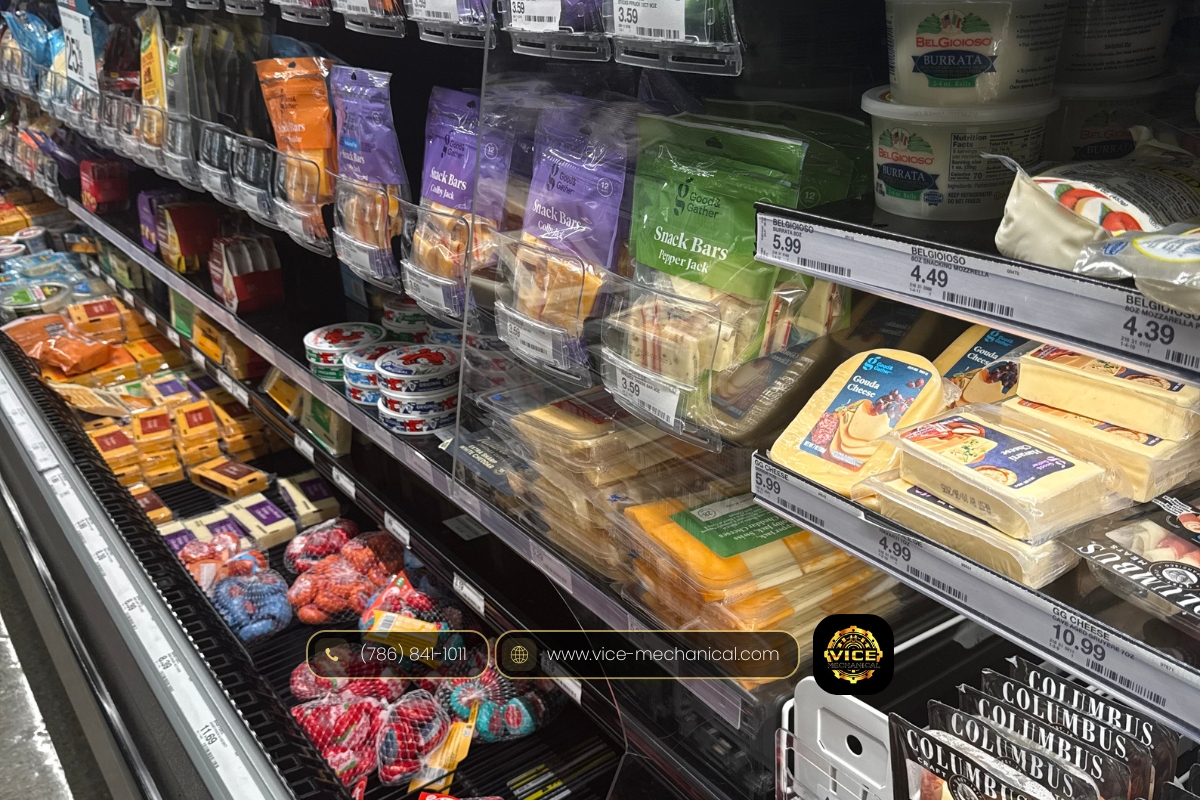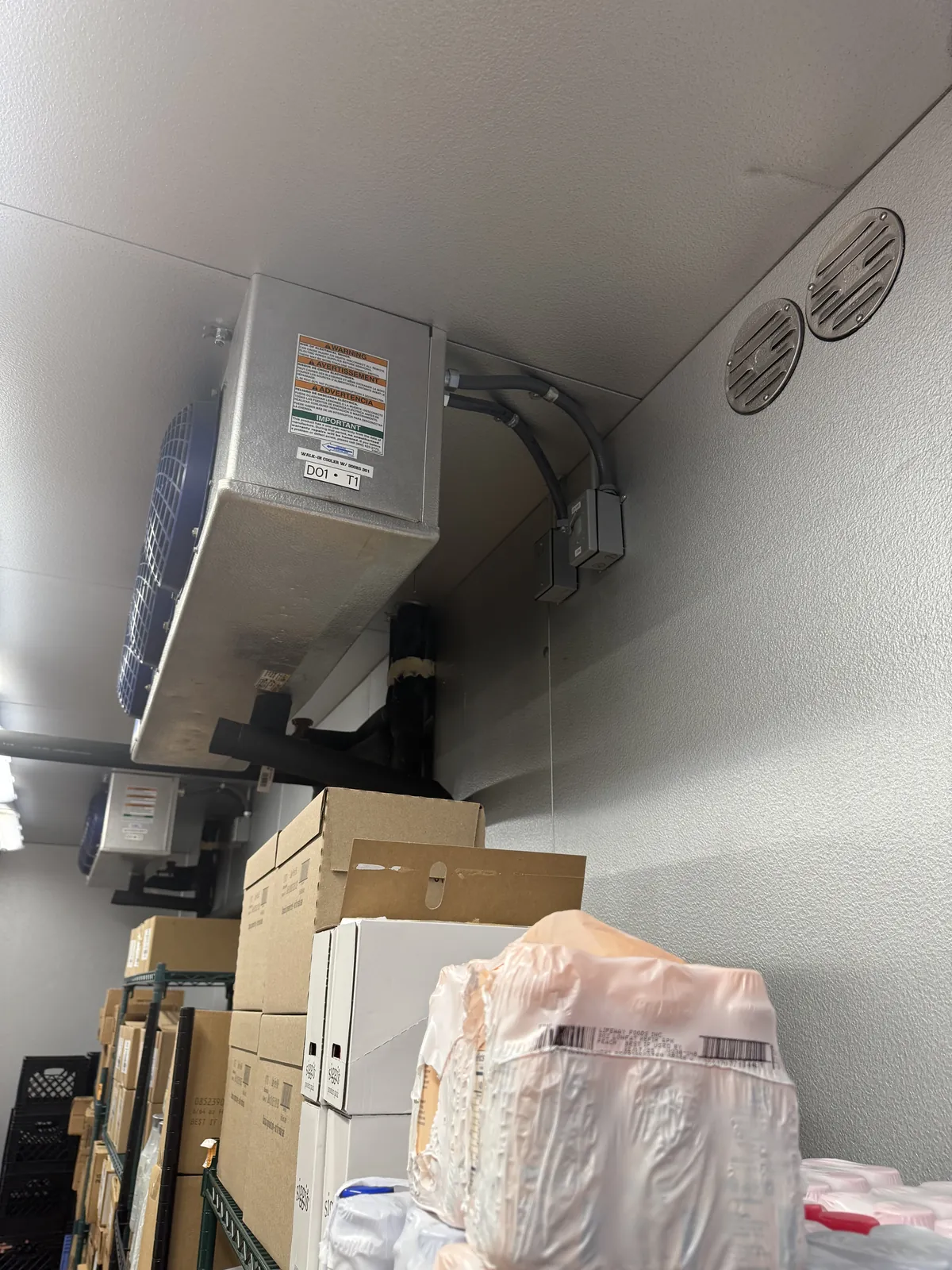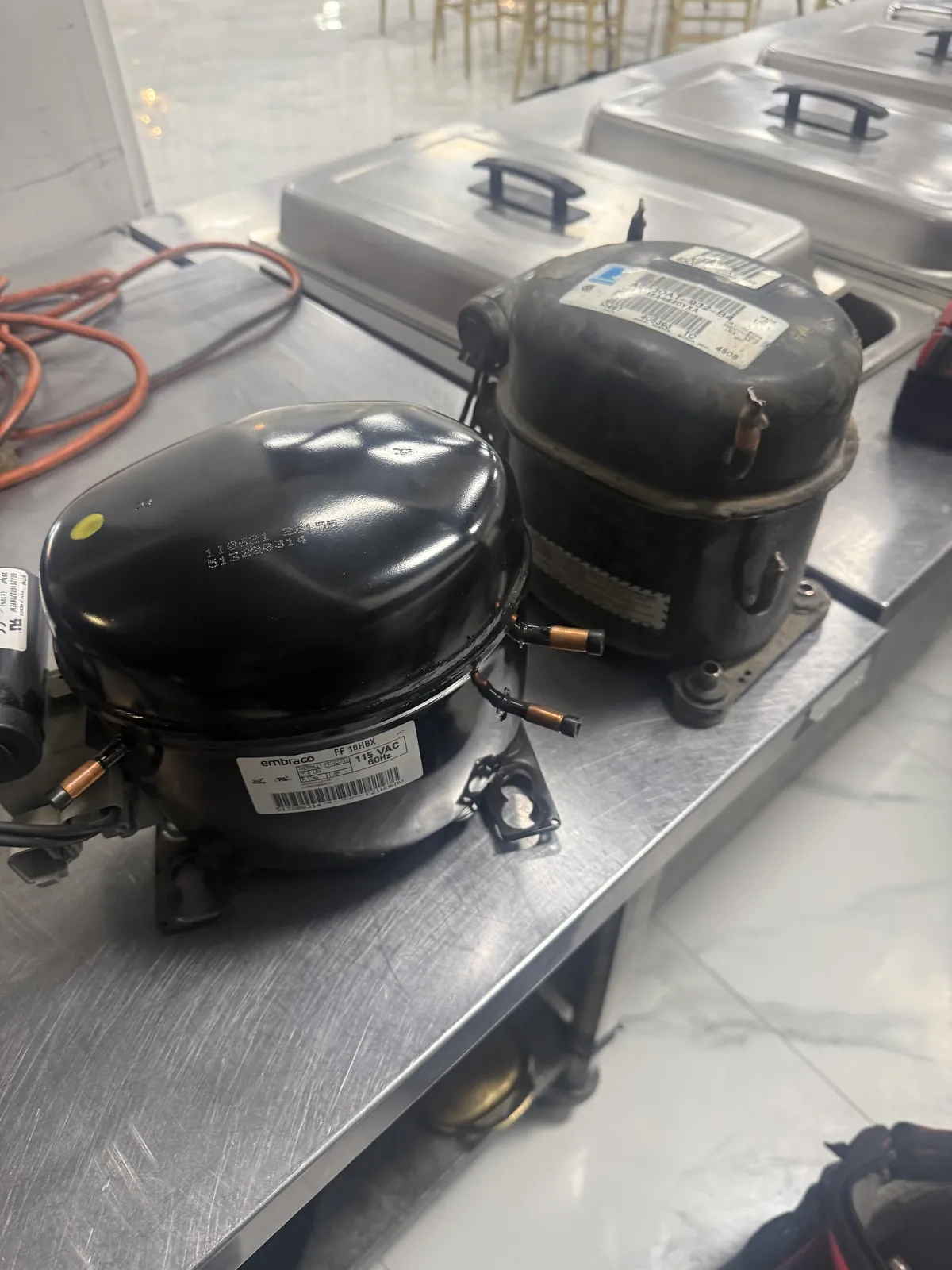
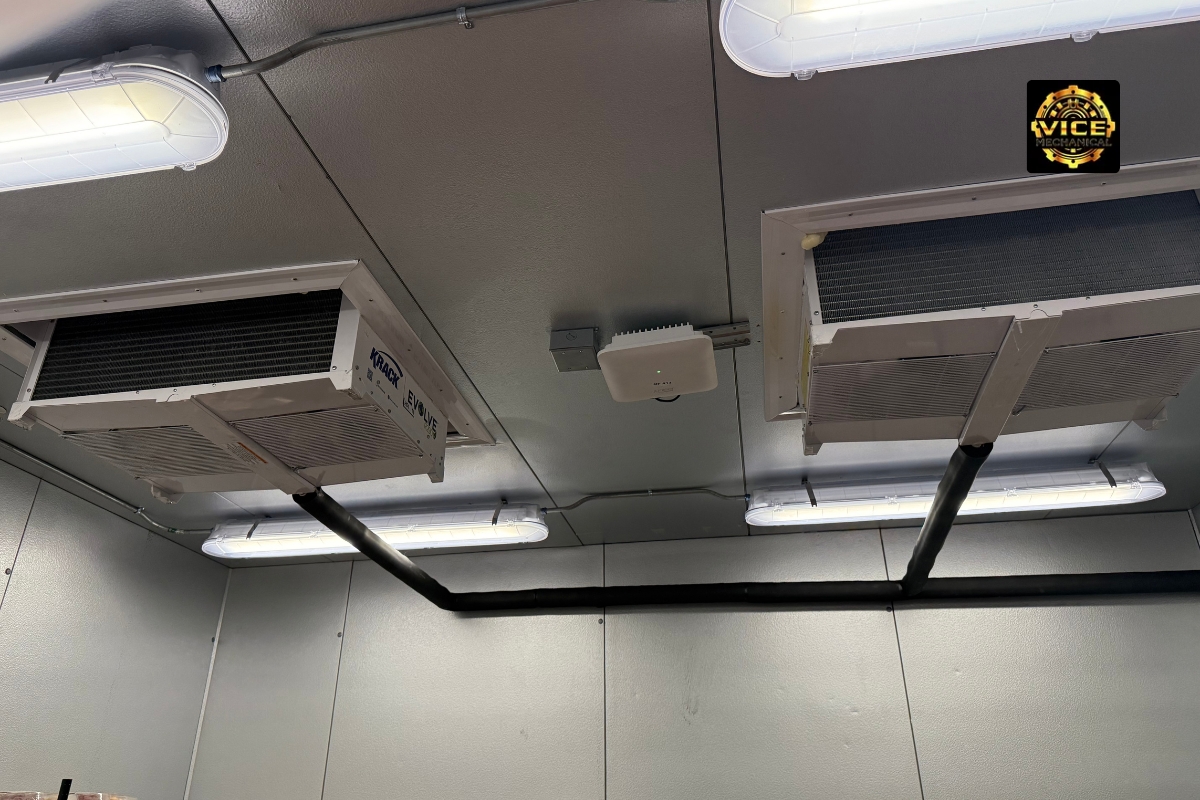
Your walk-in held 36°F all winter without a single complaint. Then July hits. Pavement heat radiates off the parking lot, and by mid-afternoon the box is creeping up to 42°F. Nothing inside the unit changed. Outside conditions did.
A walk-in cooler not holding temperature in summer rarely means the whole system failed overnight. Most of the time, a marginal problem finally gets exposed, one the unit tolerated fine in cooler months. South Florida's ambient heat pushes the condenser past its comfort zone, and something small gives way. A cooler struggling in summer heat is one of the most common calls our dispatch line takes between June and September. One of five culprits usually turns out to be the cause. Below, we walk through those five things in the order a technician would check them, before you assume the compressor is dying.
Why Broward Summers Expose Problems Winter Hides
Refrigeration equipment doesn't reject heat into a vacuum. Heat has to go somewhere, and that somewhere is the outside air. In Davie, Fort Lauderdale, and the rest of Broward County, outside air gets brutal by July and August. Fort Lauderdale has recorded highs near 100°F in both months. Daily highs typically sit in the mid-to-upper 80s and 90s all summer, per National Weather Service climate records for the area.
A condensing unit works harder to dump heat once the surrounding air is already hot. Federal testing on high ambient temperature refrigeration performance backs this up directly. Researchers at the National Institute of Standards and Technology compared split air-conditioning systems across a range of outdoor temperatures. Cooling capacity and efficiency dropped in a straight line as outdoor temperature climbed. Results got sharper at the high end of the range.
Translate that into walk-in cooler terms. A rack or condensing unit already running at 90% capacity in January has almost nothing left in reserve once ambient temperature climbs 15 to 20 degrees. Small inefficiencies suddenly become the difference between 36°F and 42°F. A slightly dirty coil, a gasket with minor wear, a charge that drifted a few degrees off spec: none of it mattered in January.
Broward's humidity compounds the problem. Moist outside air carries more latent heat into every door opening and every gap in a worn seal. A marginal cooler ends up fighting temperature and humidity at once.
1. Dirty or Blocked Condenser Coils
Grease-laden air near kitchens and loading docks turns condenser fins into dust magnets fast. A coil coated in grime acts like a blanket wrapped around the unit's ability to shed heat. Extra load like that forces the compressor to work overtime just to move the same amount of heat it used to move easily.
Federal guidance from the U.S. Department of Energy specifically flags condenser coil buildup as a driver of poor temperature regulation. Regular coil cleaning helps keep refrigeration equipment running at its intended set point. Walk-in condensers mounted on rooftops collect months of dust between service visits. Summer's higher airflow demand exposes that buildup faster than any other season.
What to check: Look at the coil fins through the guard. Matted dust, cottony buildup, or a gray film across the fins are the classic dirty condenser coil symptoms. Any of them means airflow is restricted enough to raise head pressure and choke cooling capacity.
What not to do: Skip the pressure washer. High-pressure water bends aluminum fins flat, blocking airflow permanently instead of restoring it. A soft brush, coil comb, and low-pressure rinse handle most buildup safely.
2. Condenser Placement and Airflow Clearance
Even a spotless coil can't perform if it's starved for air. Rooftop units baking in direct sun fight an uphill battle every hot afternoon. So do condensers boxed in by new equipment, or units recirculating their own hot exhaust.
Three clearance issues show up constantly on Broward service calls.
1. Storage pallets, dumpsters, or newly installed equipment sit within a few feet of the condenser intake, cutting off the fresh airflow the unit needs.
2. Discharge air from one condenser blows straight into a neighboring unit's intake, creating a heat loop that raises both units' effective operating temperature.
3. Fan blades cake up with debris or spin at reduced speed from a failing motor, cutting airflow across the coil even when the coil itself is clean.
Summer sun adds another factor. A black rooftop condenser sitting in direct afternoon sun can run 15 to 20 degrees hotter at the coil surface than the surrounding air. Extra heat load stacks on top of an already elevated ambient temperature.
3. Door Seals and Gasket Wear
Every door opening pulls hot, humid outside air into a box built to hold cold, dry air. A slightly worn gasket barely registers in winter. Once outdoor dew points sit in the 70s through July and August, that same worn gasket floods the box with moisture and heat on every swing.
Check gaskets at the corners first, since that's where they tear and lose their seal earliest. Run a dollar bill test: close the door on a bill at several points around the frame. If it pulls out with no resistance, the seal has failed at that spot.
Kitchen and retail traffic also spikes during peak summer hours. More door openings per shift mean more chances for warm air to overwhelm an already strained cooler. Product temperature matters here beyond comfort. Federal food safety guidance requires cold-holding foods at 41°F or below, and a cooler fighting constant infiltration can drift above that threshold fast.
4. Refrigerant Charge Drifting Out of Range
A system can run correctly charged all winter and still show low-charge symptoms once summer temperatures climb. Rising head pressure from a hot condenser changes the pressure relationships throughout the circuit. A charge that was borderline low in February often becomes noticeably undercharged by July.
Signs worth flagging for a technician include a suction line that feels warmer than usual and frost patterns on the evaporator that look uneven or shrunken. A compressor running long cycles without ever quite reaching set point is another red flag. None of these are DIY repairs. Refrigerant work requires EPA certification and proper recovery equipment, so this check belongs to a licensed technician, not a maintenance team.
5. Thermostat Calibration and Defrost Timing
A controller reading 36°F on the display doesn't guarantee the product inside sits at 36°F. Sensor drift and a probe that's slipped out of position are common culprits. A defrost schedule tuned for cooler months can also create a gap between what the thermostat shows and what's actually happening.
Defrost timing matters more in summer than operators expect. Longer defrost cycles, or cycles scheduled too close together, eat into actual cooling time. A schedule that worked fine in January can leave a summer-stressed system without enough runtime to recover.
What to check: Place a calibrated, independent thermometer inside the box near stored product, not near the door or the controller sensor. Compare it against the display reading after a few hours.
What to Do If the Cooler Is Still Losing Temp
Work through these five checks in order. Most operators find the culprit before ever picking up the phone. Clean coils, clear airflow, solid gaskets, and a calibrated thermostat rule out the easy causes. A walk-in cooler not holding temperature after all four usually points to refrigerant charge, a failing compressor, or an electrical fault that needs a trained eye.
Our team also put together a broader walk-in cooler troubleshooting guide covering causes beyond this summer-specific list. Worth a look if the box was already struggling before the heat wave started.
Every hour a walk-in sits above safe temperature puts inventory and health code compliance at risk. Don't let a guessing game eat into that window. Request a diagnostic visit and get a technician looking at actual pressures and temperatures instead of troubleshooting blind.
How Vice Mechanical Handles Summer Cooling Calls Across Broward
Vice Mechanical services commercial refrigeration for supermarkets, restaurants, and cold storage operators across Davie, Fort Lauderdale, and the surrounding Broward area. Our technicians see this exact seasonal pattern every summer. Every call gets a technician with gauges, a calibrated thermometer, and coil-cleaning equipment, not just a multimeter and a guess.
A structured commercial refrigeration maintenance plan catches most of these issues before ambient heat turns them into an emergency. Coil cleaning, gasket inspection, and charge verification scheduled ahead of peak summer save operators from the exact 2 p.m. panic call this article aims to prevent.
Whether it's a same-day walk-in cooler repair Broward operators need, or a scheduled maintenance visit ahead of next summer, we're ready. Call (786) 714-5586 or request service online to get a technician on-site fast.
Keep Cold Where It Belongs
Summer in Broward doesn't create new problems inside a walk-in cooler so much as expose the ones already sitting there. Check these five in order, fix what you can safely handle, and call a licensed technician for anything involving refrigerant or electrical components.
Frequently Asked Questions
Why does my walk-in cooler only struggle in summer?
Ambient heat raises the load on the condenser. Less thermal headroom means any marginal issue gets amplified: a partly dirty coil, a slightly worn gasket, a charge running a few degrees low. A minor flaw that goes unnoticed in January turns into a service call by July.
Can I clean the condenser coils myself?
Basic exterior dust removal with a soft brush or low-pressure air is generally safe for trained maintenance staff. Deep cleaning, fin straightening, and anything involving electrical components or refrigerant lines needs a licensed technician.
How often should a commercial walk-in cooler get serviced in summer?
Most Broward operators benefit from a pre-summer inspection in late spring, plus a mid-summer check. Add the manufacturer's recommended cadence on top of that. High-traffic kitchens and supermarkets often need more frequent coil cleaning given grease and dust buildup.
Is a warm suction line always a sign of low refrigerant?
Not always. Airflow restriction, a failing fan motor, or evaporator icing can all cause the same symptom. A technician needs to check actual pressures rather than relying on touch alone.
What temperature should a walk-in cooler hold for food safety?
Commercial walk-in coolers need to hold food at 41°F or below. Federal guidance sets that cold-holding standard in the FDA Food Code, and readings above it call for immediate diagnostic service.