
It is the question every operator eventually asks: how often does commercial refrigeration actually need maintenance? The honest answer is that there is no single number that fits every business — a lightly used reach-in in a boutique market and a supermarket rack running twenty-four hours a day live in different worlds. But there is a sensible framework, and getting it right is one of the highest-return decisions you can make about equipment you depend on to protect inventory.
The operators who almost never have refrigeration emergencies are, nearly always, the ones on a regular maintenance schedule.
Cadence depends on the equipment and the workload
Maintenance frequency scales with how hard a system works, how critical it is, and how punishing its environment is. As a general framework rather than a hard rule:
- Reach-ins, prep tables, and lighter-duty self-contained units: a periodic professional check, often a couple of times a year, with regular in-house coil cleaning in between.
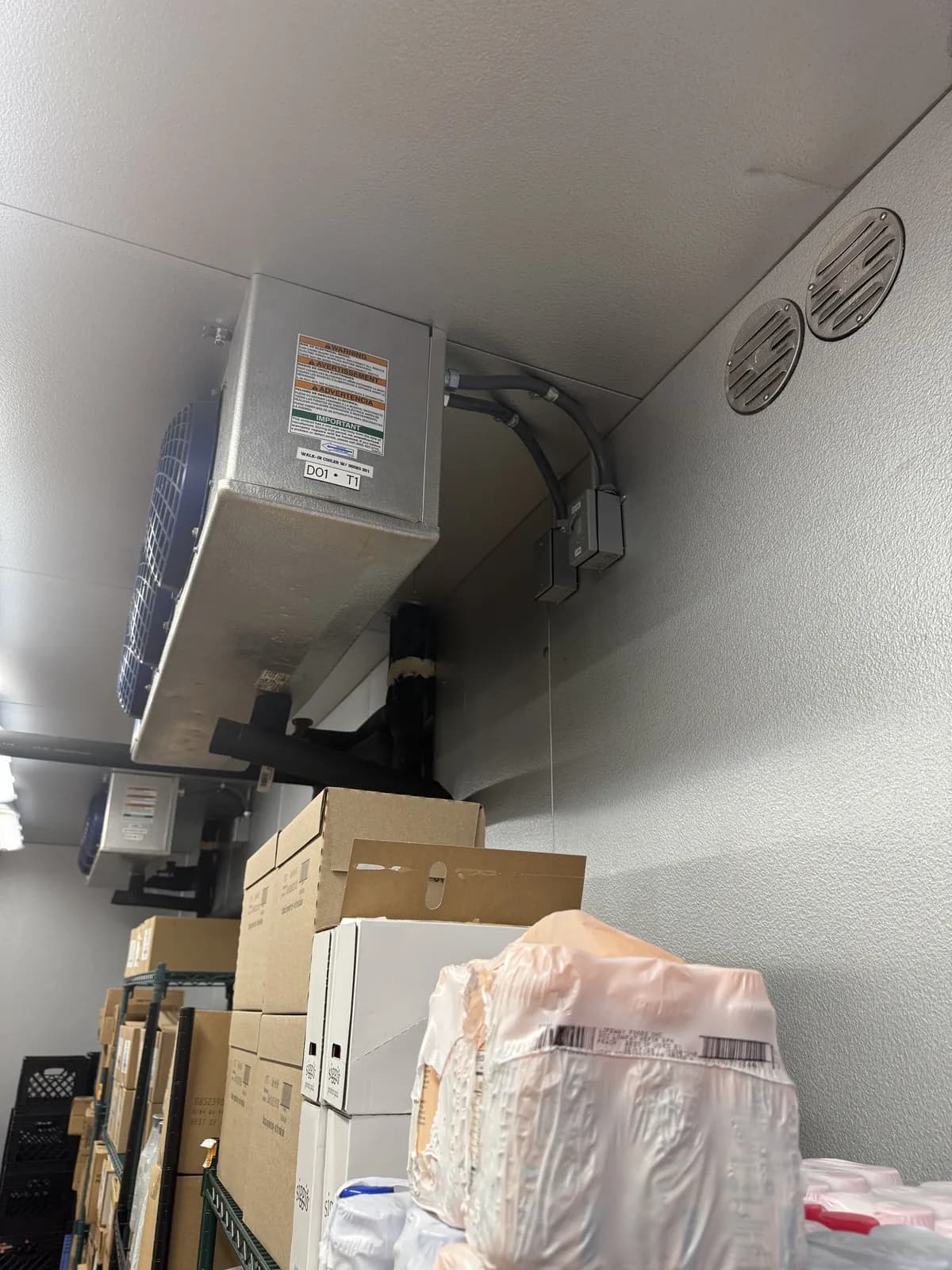
- Walk-in coolers and freezers: a more frequent cadence — many operators land on quarterly — because a single walk-in failure can put a large amount of product at risk at once.
- High-volume commercial kitchens and busy markets: more frequent still, because heavy door traffic, grease, and heat accelerate wear.
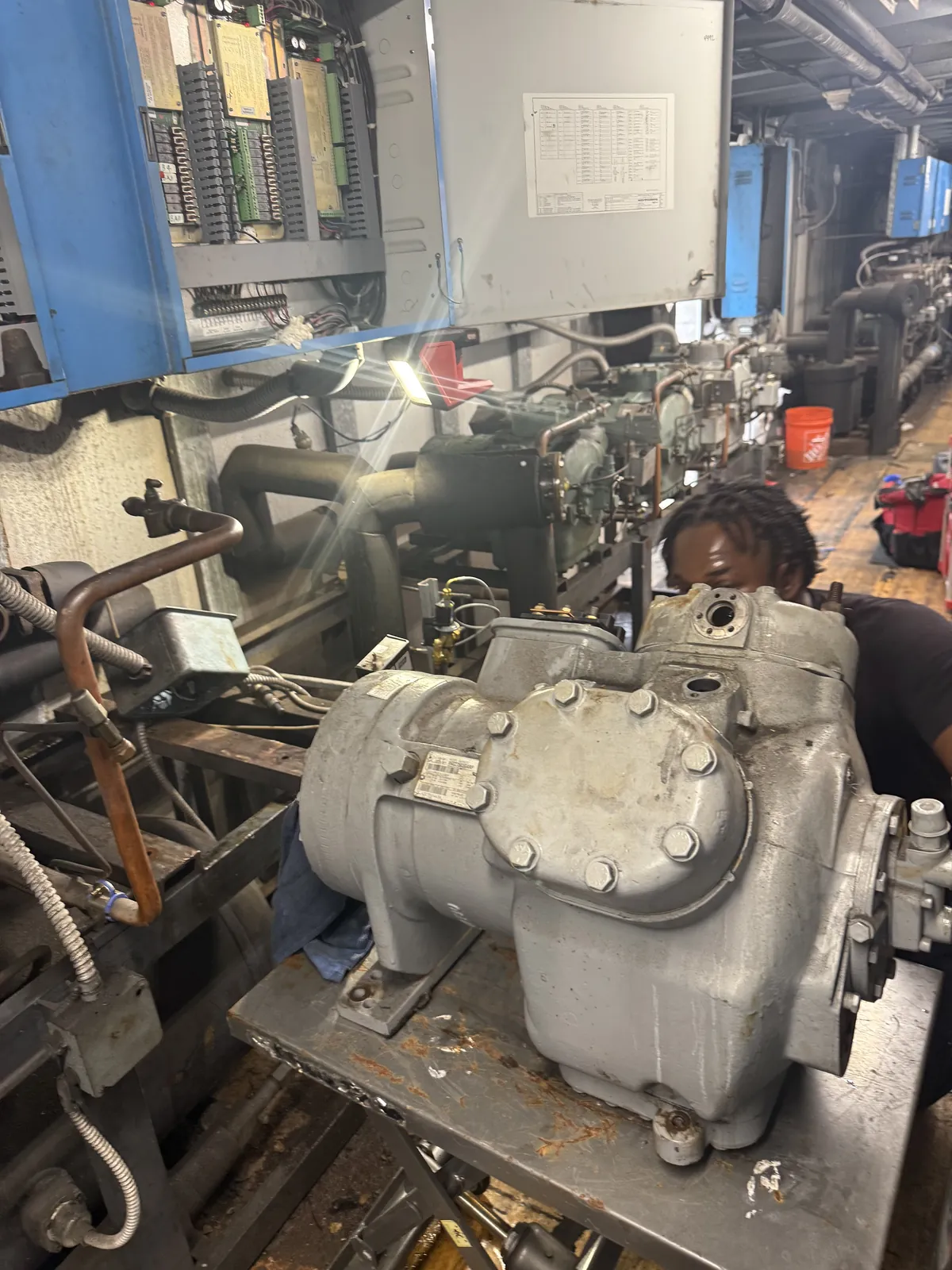
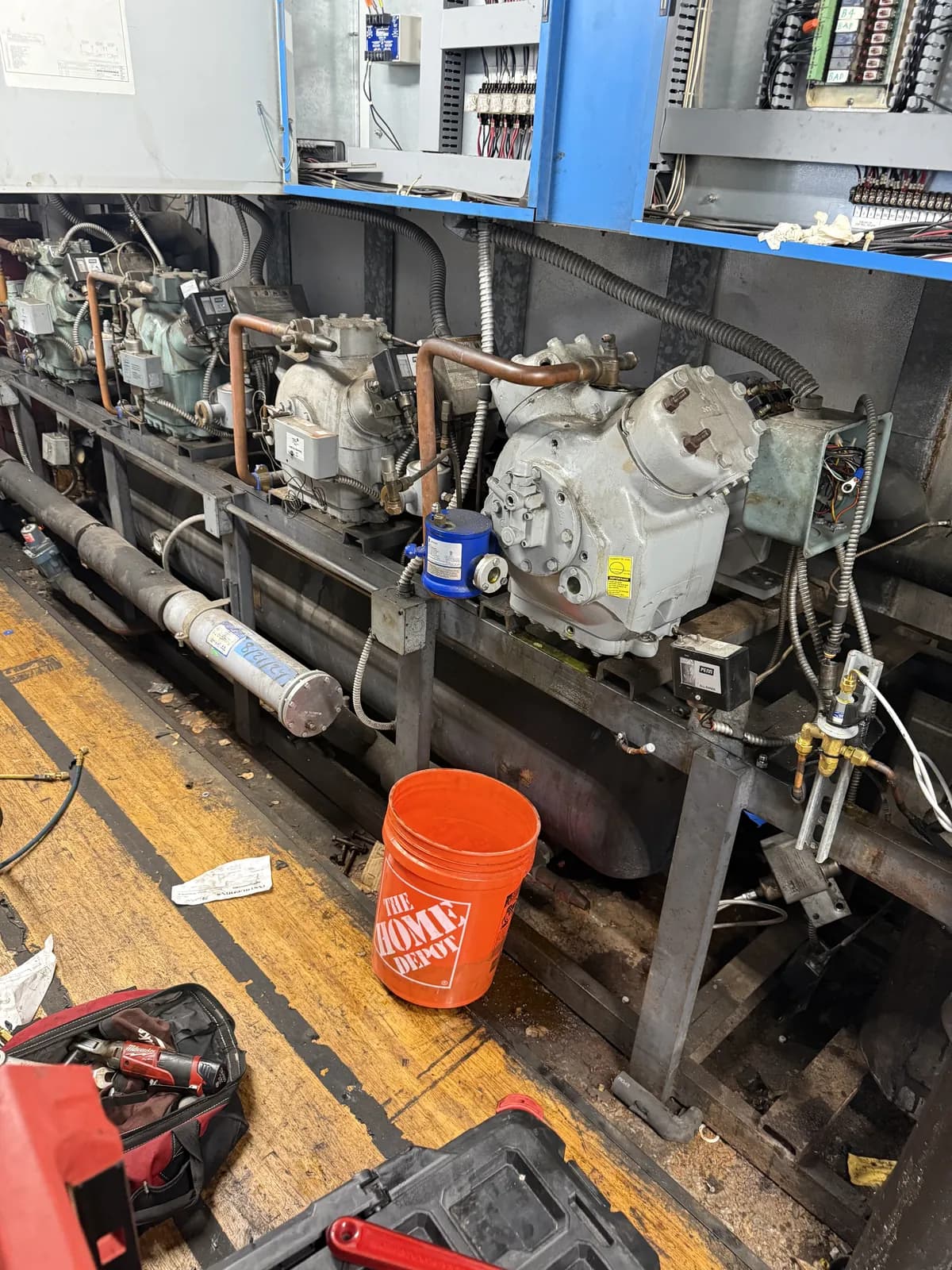
- Supermarket parallel rack and CO₂ systems: the most demanding, running continuously and warranting the closest, most regular professional attention.
The right cadence for your operation is best set with a technician who has actually looked at your equipment and your usage — but the pattern is consistent: the harder and more critical the system, the more often it needs eyes on it. Professional bodies such as ASHRAE, which publishes the refrigeration standards the trade works to, make the same basic point: maintenance intervals should match the equipment and its duty, not a calendar picked at random.
What a preventive maintenance visit actually covers
A real PM visit is not someone glancing at a thermometer. Done properly, it is a systematic check of the components most likely to drift or fail:
- Cleaning the condenser and evaporator coils so the system can actually reject heat.
- Checking refrigerant charge and inspecting for leaks before they starve the system.
- Verifying the defrost cycle and clearing the drain line so ice and water do not build up.
- Inspecting door gaskets, hinges, and closers that let humid air infiltrate the box.
- Testing controls, sensors, and setpoints for drift.
- Checking electrical connections, contactors, and compressor operation for early signs of stress.
The point of the visit is to find the small problem — the fouling coil, the weakening gasket, the sensor beginning to drift — while it is still small and cheap, instead of meeting it as a failure with a box full of spoiled product. It is the same logic the U.S. Department of Energy applies to cooling equipment generally, and that ENERGY STAR builds into its guidance: clean coils, a correct charge, and sound seals are what keep a system efficient and reliable over its life.
The temptation is to defer service because the box is still holding temperature today. But the fouling coil, the slow leak, and the drifting sensor all do their damage silently — and the compressor pays for it. A planned visit catches those while they are a cleaning or an adjustment, not a failure with product on the line.
The Florida factor: humidity and salt air
South Florida is harder on refrigeration than most of the country, and that pushes the maintenance schedule up. Our relentless humidity means condensate drains work overtime and any gap in a door seal invites a constant moisture load onto the coil. Near the coast, salt air accelerates corrosion on condenser coils and outdoor components, quietly eating away at heat-transfer surfaces and electrical connections. Equipment that might coast on an annual check in a dry, mild climate needs more frequent attention here — the environment simply does not give the system a break.

The ROI: what maintenance actually protects
Preventive maintenance is easy to defer because nothing is broken today. The way to think about it is what it protects. The compressor is the most expensive component in a refrigeration system, and it fails early when it is forced to run against a dirty condenser, a low charge, or an iced coil — all conditions a routine visit catches. Behind that single component sits the real exposure: the inventory in the box, the revenue lost while the system is down, and the emergency-repair premium of fixing something at the worst possible moment instead of on a planned visit.
Framed that way, a maintenance plan is not an expense so much as insurance against the three things that actually hurt — a major component failure, product loss, and downtime. The operators who almost never have refrigeration emergencies are, nearly always, the ones on a regular commercial refrigeration maintenance schedule, whether that covers a single walk-in cooler or a full parallel rack and CO₂ system.
Vice Mechanical builds maintenance around your specific equipment and how hard it works, for businesses throughout Davie and Broward County. And if something does fail between visits, our emergency line is open 24/7 — call (786) 841-1011 or request service online.
- There is no universal number — cadence scales with workload and how critical the system is.
- Walk-ins often warrant quarterly attention; supermarket racks and CO₂ systems need the closest, most regular care.
- A proper PM visit checks coils, charge, defrost, drains, gaskets, controls, and electrical.
- Florida humidity and coastal salt air accelerate wear and push the schedule up.
- The payoff is avoiding a compressor failure, product loss, and emergency downtime.