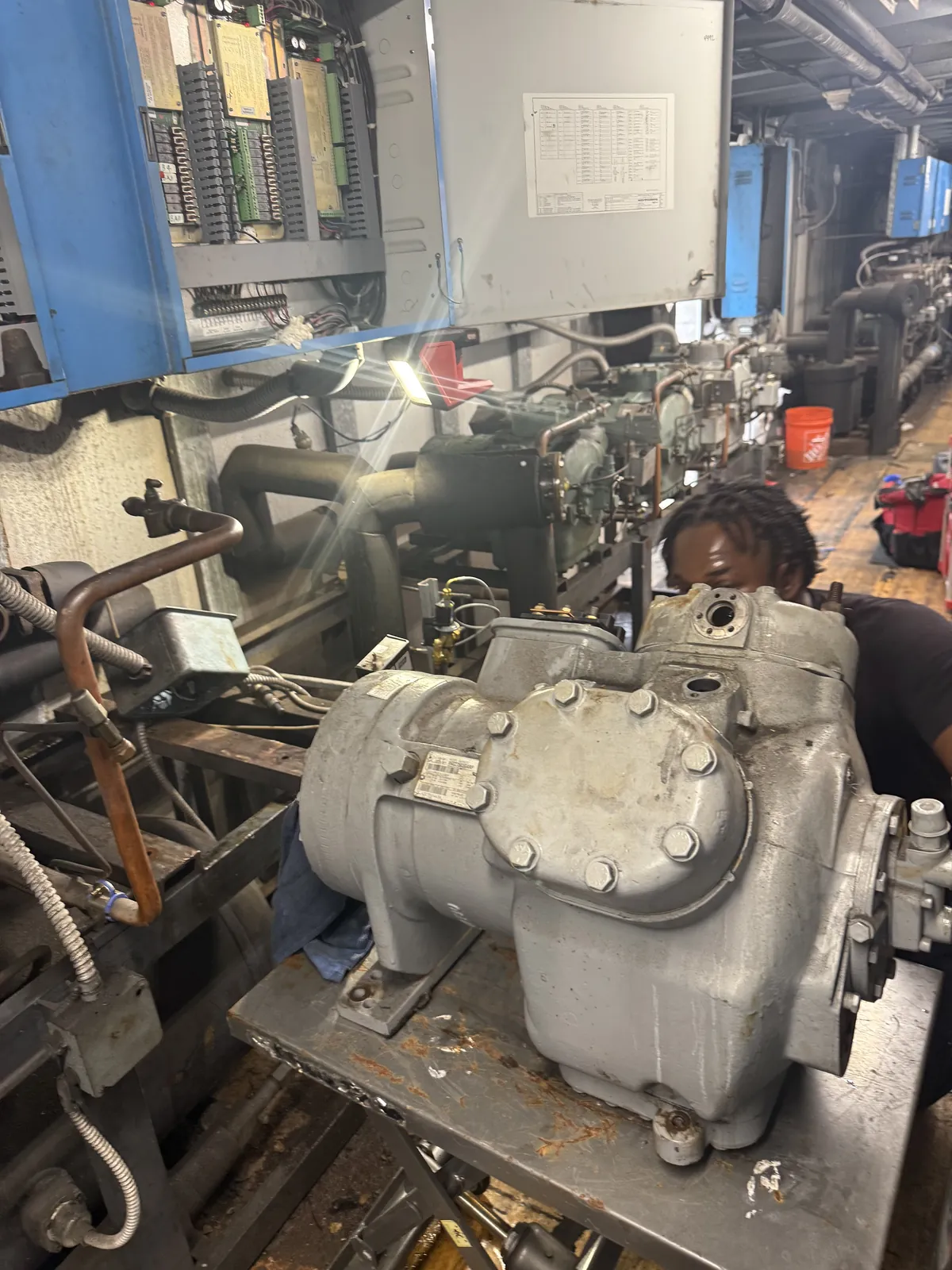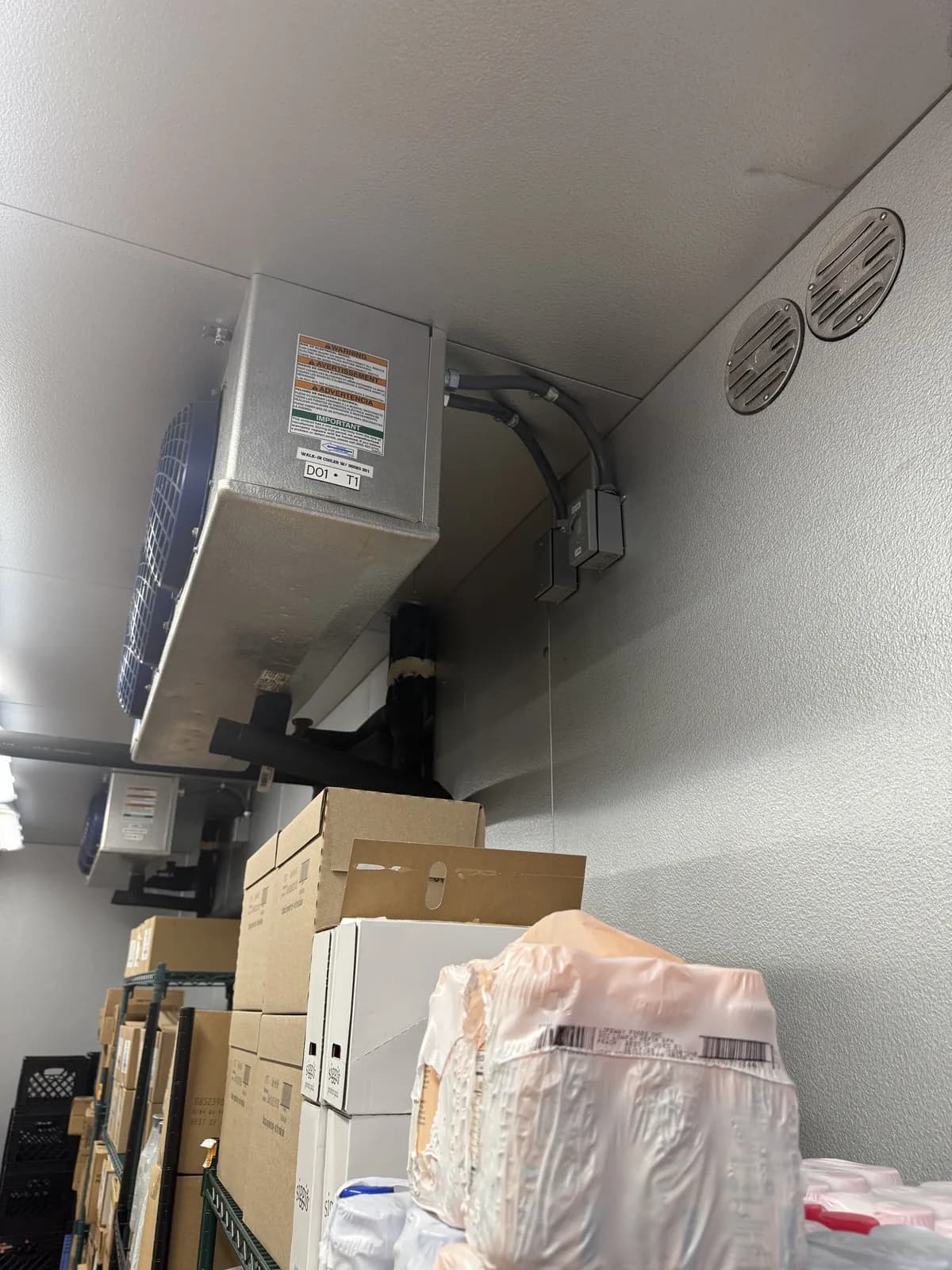
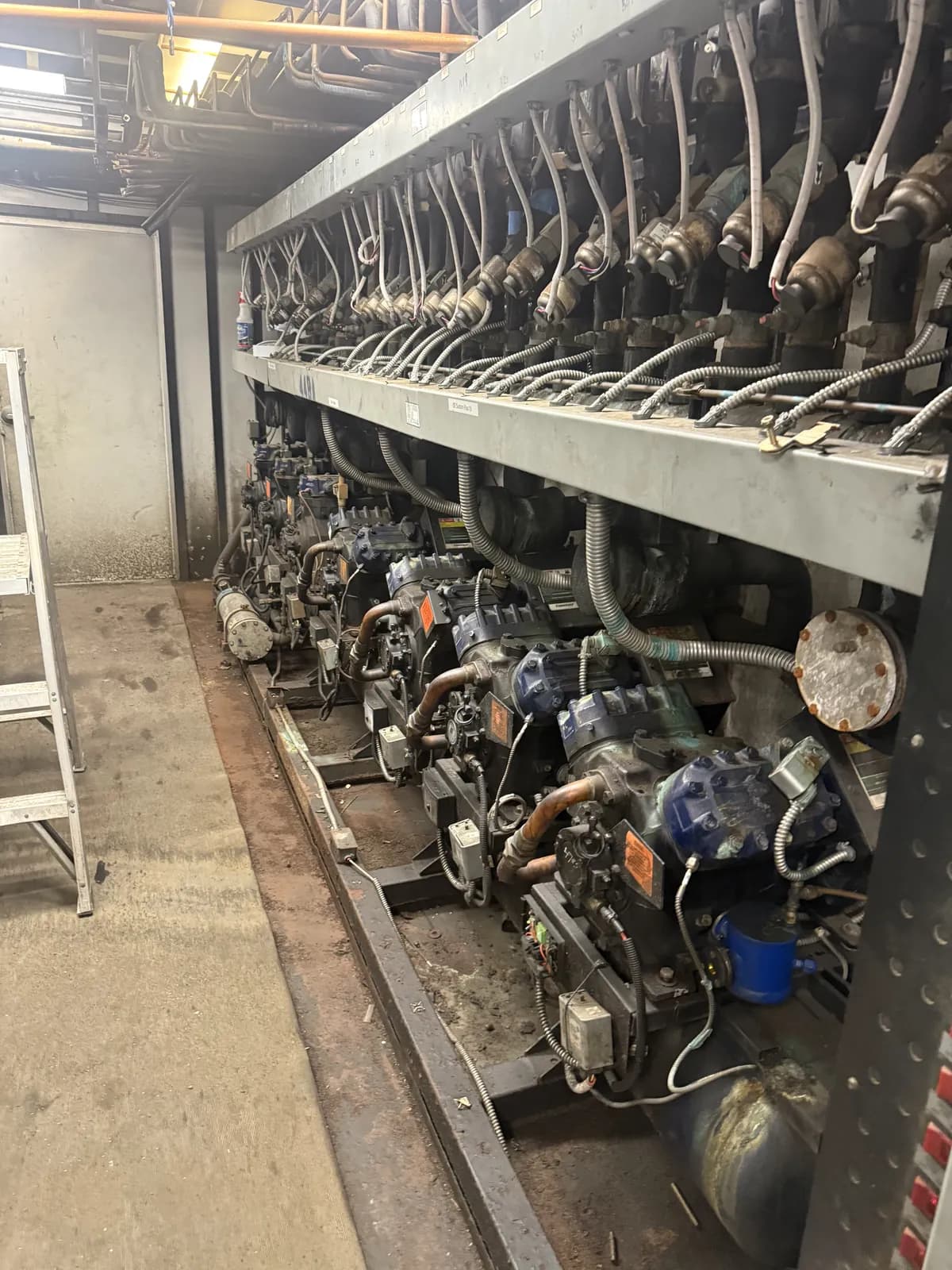

If you own or operate a supermarket, the refrigerant humming under your floors and behind your cases is quietly becoming a strategic decision. For decades, hydrofluorocarbon (HFC) refrigerants like R-404A ran nearly every commercial rack in the country. Now regulation and technology are pushing the industry toward natural refrigerants — and carbon dioxide, labeled R-744, is leading the way. This is a plain-English look at HFC versus CO₂ systems, what is driving the shift, and the wrinkle that matters most in Florida: heat.
The difference between a CO₂ system that saves money in Florida and one that struggles is largely in the engineering and the commissioning — not the refrigerant itself.
Why the refrigerant landscape is shifting
The main driver is federal policy. The American Innovation and Manufacturing (AIM) Act directs the EPA to phase down the production and consumption of high-global-warming-potential HFCs by roughly 85% over about a fifteen-year period; you can read the framework on the EPA HFC reduction program page. On top of that phasedown, EPA rules — including its long-running SNAP program that reviews acceptable substitutes — are steadily lowering the allowable global-warming potential (GWP) of the refrigerants that can be used in new commercial refrigeration equipment.
The practical effect for a supermarket operator: the high-GWP HFCs that ran the last generation of racks are being restricted in new systems, and the industry is moving toward low-GWP alternatives. CO₂ is a natural refrigerant with a GWP of 1 — the baseline the whole scale is measured against — and it is non-flammable and inexpensive as a fluid. That combination is why the industry projects rapid growth in CO₂ transcritical systems for supermarket refrigeration in the years ahead. This is a direction of travel, not a fixed number, but the momentum is real and worth planning around.
The AIM Act phasedown and EPA rules primarily govern new equipment and the long-term supply of virgin high-GWP refrigerant. An existing HFC rack can keep running — the smart move is to keep it leak-tight, because every pound of lost refrigerant now costs more and gets harder to replace as supply tightens.
What HFC systems do well — and where they are vulnerable
HFC rack systems are a known quantity. Nearly every refrigeration contractor can service them, parts and components are everywhere, and they perform predictably in hot climates. If you run an existing HFC rack, it is not suddenly illegal or obsolete — the phasedown primarily governs new equipment and the supply of virgin high-GWP refrigerant over time.
The vulnerability is future cost and availability. As the phasedown tightens the supply of high-GWP HFCs, the refrigerant you top a leaking system off with can get more expensive and harder to source. A leaky HFC rack is both an environmental liability and a growing operating cost. That is a real consideration when you are weighing whether to keep repairing an aging system or plan a transition.
How CO₂ (R-744) transcritical systems work
CO₂ has unusual thermodynamics. Its critical point sits around 88°F, which means that on a hot day the system operates in what is called the "transcritical" region — instead of a conventional condenser rejecting heat, the system uses a gas cooler and runs at very high pressures. That is why CO₂ systems are engineered and built differently from HFC racks, and why they demand a contractor who genuinely knows them.
The Florida wrinkle: efficiency in the heat
Here is the nuance every Florida operator should understand. Because CO₂ goes transcritical above that ~88°F critical point, a basic "booster" CO₂ system can actually lose efficiency in hot, humid climates — exactly our climate — compared to cooler regions where CO₂ has an easy efficiency edge. This is not a reason to write off CO₂; it is a reason to specify and commission it correctly. Modern transcritical designs close that gap with technologies like parallel compression, ejectors, and adiabatic gas coolers built to keep the system efficient in high ambient temperatures. The U.S. Department of Energy makes the same broad point about cooling equipment: the efficiency you actually get depends on how the system is designed and installed for its real conditions, not the nameplate alone.

What it means for a Florida operator
- If you run an existing HFC rack, plan for rising refrigerant cost and tighter supply over time — and keep leaks fixed, because they hit both the environment and your wallet.
- If you are building or remodeling, CO₂ transcritical is increasingly the forward-looking choice, but the hot climate makes correct system design and commissioning essential.
- Whatever the refrigerant, the contractor who installs and commissions the system matters as much as the equipment brand.
Where Vice Mechanical fits
CO₂ and parallel rack systems are a genuine specialty for us, not a service we outsource. We have hands-on experience with both traditional HFC racks and advanced CO₂ (R-744) transcritical systems, including the start-up and commissioning work that most South Florida shops will not take on. If you are weighing a refrigerant transition, a new supermarket buildout, or a rack that is not performing the way it should, our rack and CO₂ refrigeration team and our mechanical construction group can help you make the call with clear eyes — for markets across Miami, Fort Lauderdale, and the wider tri-county area.
Planning a system or troubleshooting an underperforming rack? Call (786) 841-1011 or request service online and talk it through with a contractor who commissions these systems firsthand.
- The AIM Act directs the EPA to phase down high-GWP HFCs about 85% over roughly fifteen years — mostly affecting new equipment and virgin refrigerant supply.
- CO₂ (R-744) has a GWP of 1, is non-flammable, and is the natural refrigerant the industry is moving toward for supermarkets.
- CO₂ goes transcritical above about 88°F, so in Florida heat the design and commissioning decide whether it saves money or struggles.
- An existing HFC rack is not illegal — but keep it leak-tight as refrigerant supply tightens and prices rise.
- For any refrigerant, who installs and commissions the system matters as much as the brand.