There is no worse time for an air conditioner to quit than a South Florida summer afternoon. Inside temperatures climb fast, humidity makes it feel worse, and the wait for a technician feels a lot longer when the house is 85 degrees. The good news: a few quick checks solve a real share of no-cooling calls, and knowing the rest helps you explain the problem when you call for help.
This guide walks through the safe checks any homeowner can do, the most common reasons an AC stops cooling, and the point where you need a licensed HVAC technician — because in Florida, the difference between a five-minute fix and a real repair matters.
In a Florida summer, an AC that “runs but doesn’t cool” can heat a house past 85 degrees in an afternoon — start with the simple checks.
First, the Safe Checks You Can Do Yourself
Before you call, spend five minutes on the basics. None of these require tools or touching the refrigeration system, and they clear a surprising number of service calls.
- Thermostat: confirm it is set to COOL, the temperature is below the room reading, and the batteries are good.
- Air filter: a clogged filter is the single most common cause of weak or no cooling; if it is gray, replace it.
- Breaker: check that the AC breaker has not tripped, and reset it once — if it trips again, stop and call a pro.
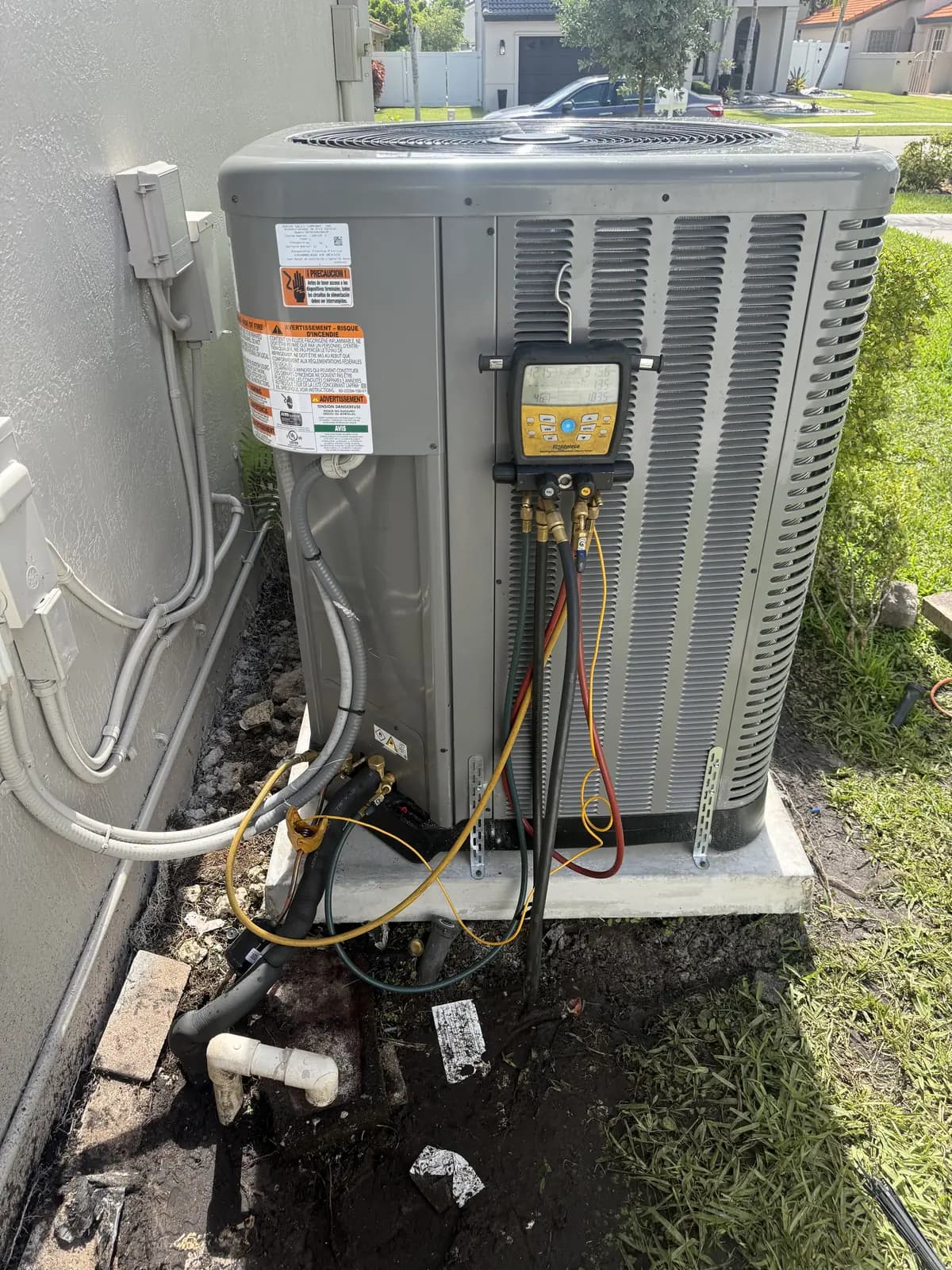
- Outdoor unit: make sure the condenser is running and clear of leaves, grass, and debris, with a couple of feet of space around it.
- Vents and returns: confirm supply vents are open and return grilles are not blocked by furniture or rugs.
A dirty air filter restricts airflow, drops cooling, and can freeze the indoor coil solid. In Florida’s dusty, humid climate, filters clog fast. Replacing a clogged filter is the easiest fix you can make — check it before anything else.
Common Reasons an AC Stops Cooling
If the basics check out, the cause usually sits in one of these components. Some you can spot; the refrigeration ones need a technician.
- Frozen evaporator coil: restricted airflow or low refrigerant ices the indoor coil, so the system runs but blows warm; turn it off and let it thaw before calling.
- Low refrigerant or a leak: refrigerant is not consumed, so a low charge means a leak that a certified technician must find and repair — not just “top off.”
- Dirty condenser coil: a grimy outdoor coil cannot reject heat, so the system runs constantly and never quite cools.
- Failed capacitor: a common, affordable failure that keeps the compressor or fan motor from starting, especially after a power surge.
- Clogged condensate drain: a backed-up drain trips the safety float switch and shuts the system down to prevent water damage.
- Thermostat or control fault: a miscalibrated or failing thermostat can stop the system from calling for cooling at all.
Why It Is Worse in South Florida
Our climate is hard on air conditioners. Systems run nearly year round, salt air near the coast corrodes coils and electrical connections, and constant humidity keeps drain lines and coils working overtime. That heavy duty cycle is exactly why regular maintenance and right-sized equipment — the kind of efficiency the U.S. Department of Energy and ENERGY STAR both emphasize — pay off faster here than almost anywhere else.
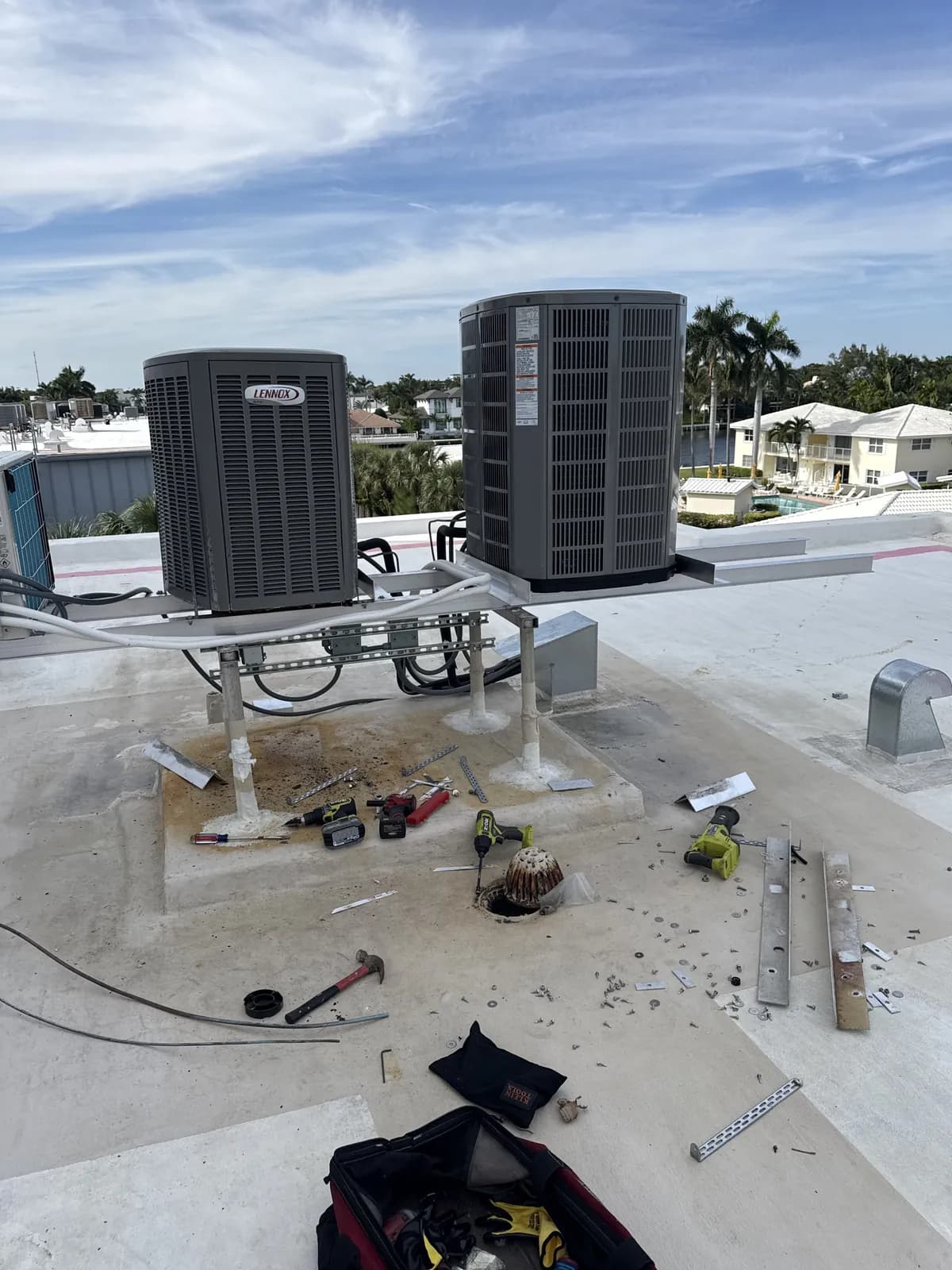
When to Call a Licensed HVAC Technician
- The system runs but blows warm air after you have checked the filter, thermostat, and breaker.
- The indoor coil or refrigerant line is frozen, or you see ice on the system.
- The breaker trips again after one reset, which points to an electrical fault.
- You suspect a refrigerant leak — by law, only an EPA Section 608 certified technician can handle refrigerant.
- Water is pooling around the indoor unit, or the system keeps shutting itself off.
Refrigerant work in particular is not a DIY job. Federal rules under EPA Section 608 require a certified technician to handle refrigerant, both for safety and for the environment.
How Vice Mechanical Keeps South Florida Homes Cool
Vice Mechanical brings the same commercial-grade rigor we use on refrigeration to your home’s air conditioning — diagnostics, repairs, mini-split and system installs, and maintenance sized for our climate. We serve homeowners across Davie, Fort Lauderdale, and the wider tri-county area, with 24/7 emergency response when the heat cannot wait.
No cold air at home? Call (786) 841-1011 or request service online and we’ll get a technician on the way.
- Start with the filter, thermostat, breaker, and a clear outdoor unit — these fix many no-cooling calls.
- A system that “runs but blows warm” often has a frozen coil or low refrigerant.
- A dirty condenser, failed capacitor, or clogged drain are common, fixable culprits.
- South Florida’s heat, humidity, and salt air make regular maintenance especially worthwhile.
- Refrigerant work legally requires an EPA Section 608 certified technician.
AC Not Cooling FAQ
When the AC quits in the Florida heat, a few calm checks can get you cool again — and knowing when to call keeps a small problem from becoming a compressor replacement. When the heat cannot wait, Vice Mechanical is on call around the clock.