
Commercial refrigeration almost never fails out of nowhere. Long before a walk-in quits or a display case dumps its temperature during a Saturday rush, the system is usually telling you it is in trouble — you just have to know the signals. The operators who avoid catastrophic product loss are the ones who catch these signs early and get the system serviced on their schedule, not the equipment’s.
Below are five of the most reliable early warnings our technicians see across Broward County kitchens, markets, and cold-storage facilities — and why each one is far cheaper to fix as a symptom than as a 2 a.m. breakdown.
Refrigeration rarely dies without warning — it whispers first. The operators who avoid disasters are the ones who listen.
1. Temperatures that are slowly creeping up
The clearest early sign is a box or case that is running a few degrees warmer than it used to, or one that takes noticeably longer to recover after the doors have been open during a busy stretch. A system in good health snaps back to setpoint quickly. When recovery gets sluggish or your holding temperature quietly climbs, something is losing capacity — a slow refrigerant leak, a fouling coil, or a struggling compressor.
This matters for more than the equipment. Under the FDA Food Code, cold Time/Temperature Control for Safety (TCS) foods must hold at 41°F or below, and the USDA warns that bacteria multiply fastest in the danger zone between 40°F and 140°F. A box that is drifting up is drifting toward a compliance problem, not just a mechanical one — which is why the trend line on your temperature logs matters more than any single reading.
2. Ice or frost where it does not belong
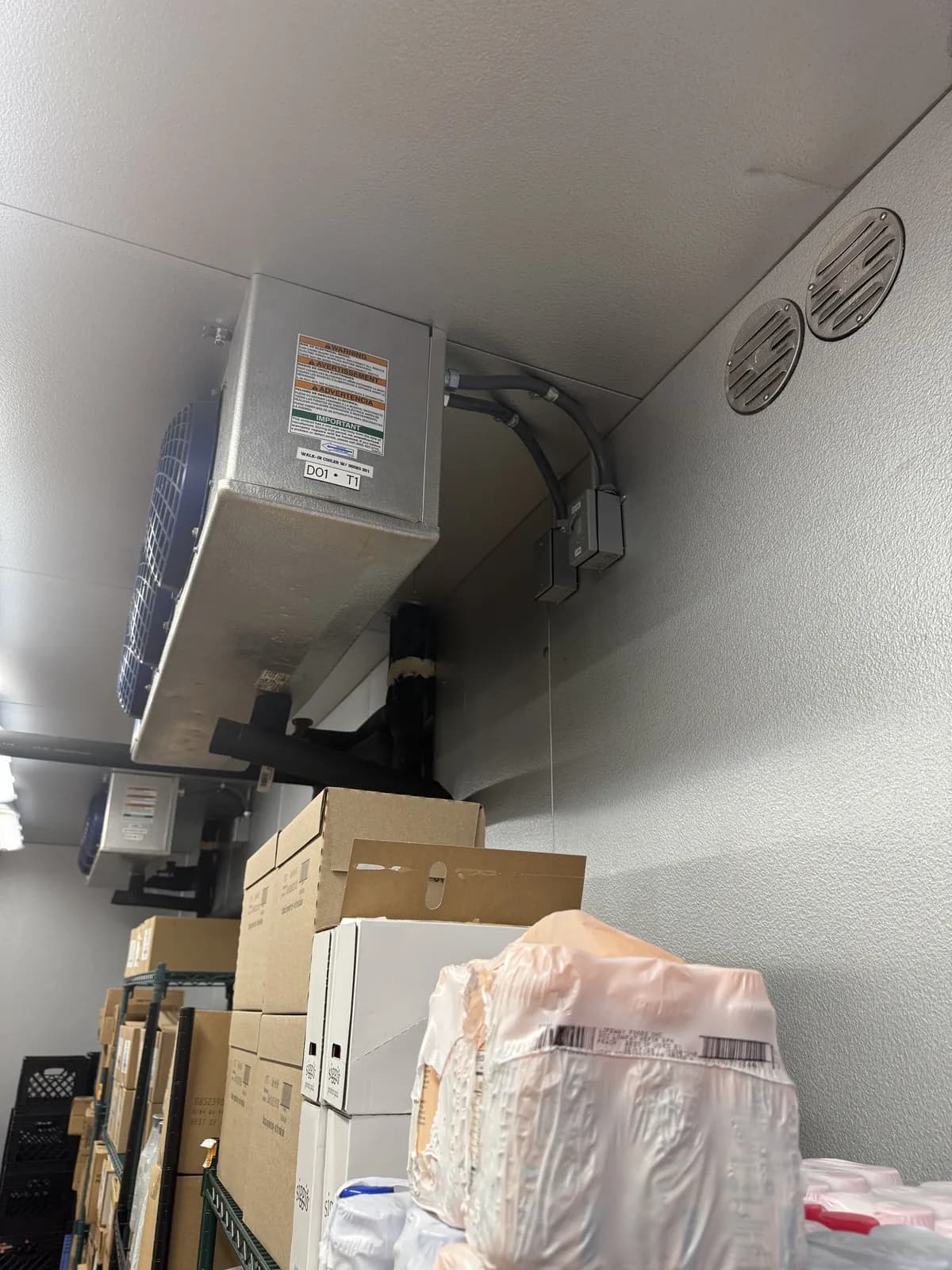
A little frost on an evaporator between defrost cycles is normal. Heavy, persistent ice is not. Ice packed on the evaporator coil, frost creeping across product, or a sheet of ice on the freezer floor usually points to a defrost fault, a drain problem, or excess humidity leaking in through tired door gaskets. Left alone, that ice chokes airflow and forces the system to run harder to do less — which drags every other component down with it.
- Ice on the evaporator coil or fan guards, especially if it returns quickly after a manual defrost.
- Frost forming on packaging or product near the air discharge.
- A sheet of ice building on the freezer floor or around the door frame.
- Water pooling under the unit as intermittent ice melts and refreezes.
3. A compressor that short-cycles
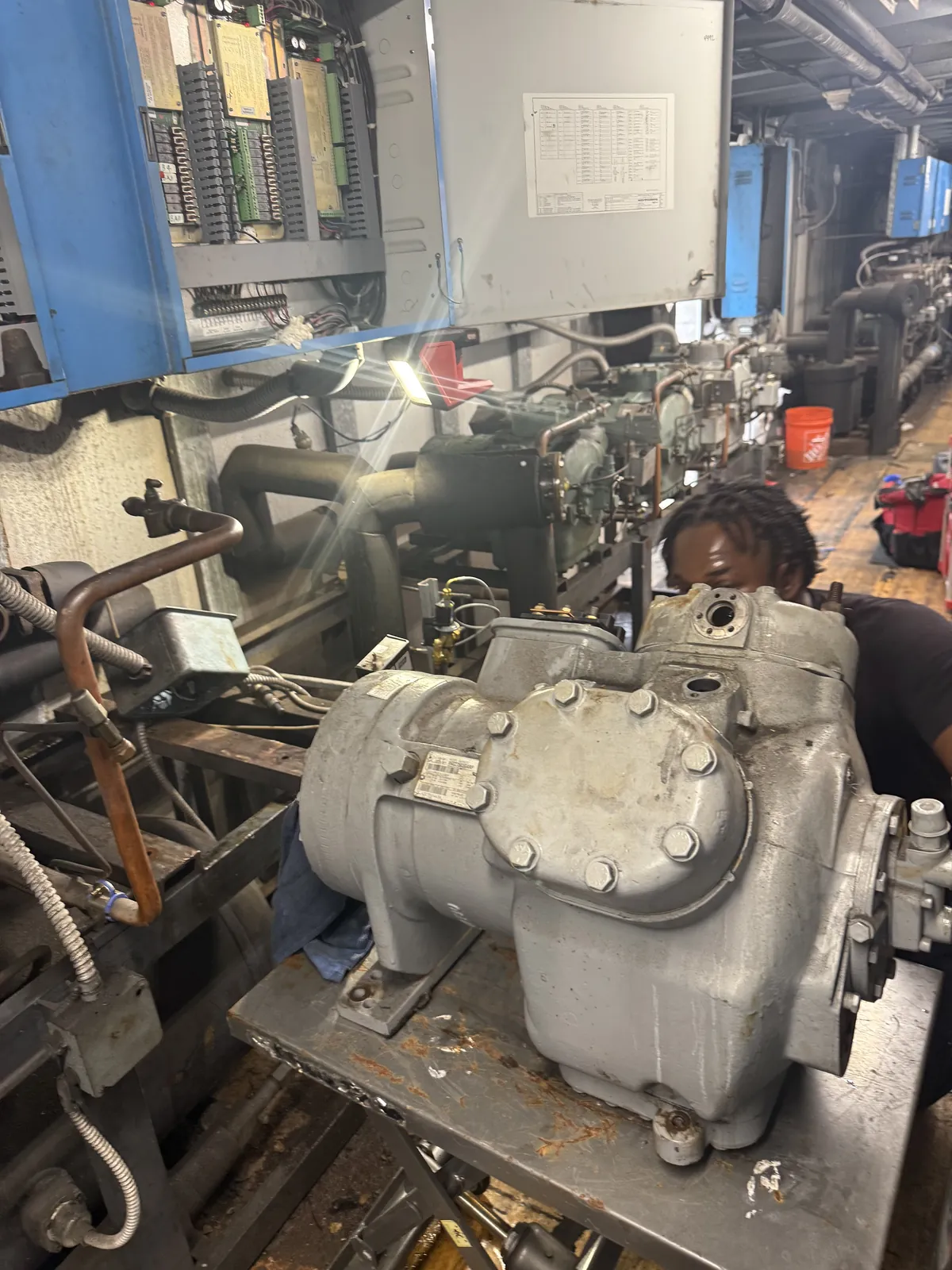
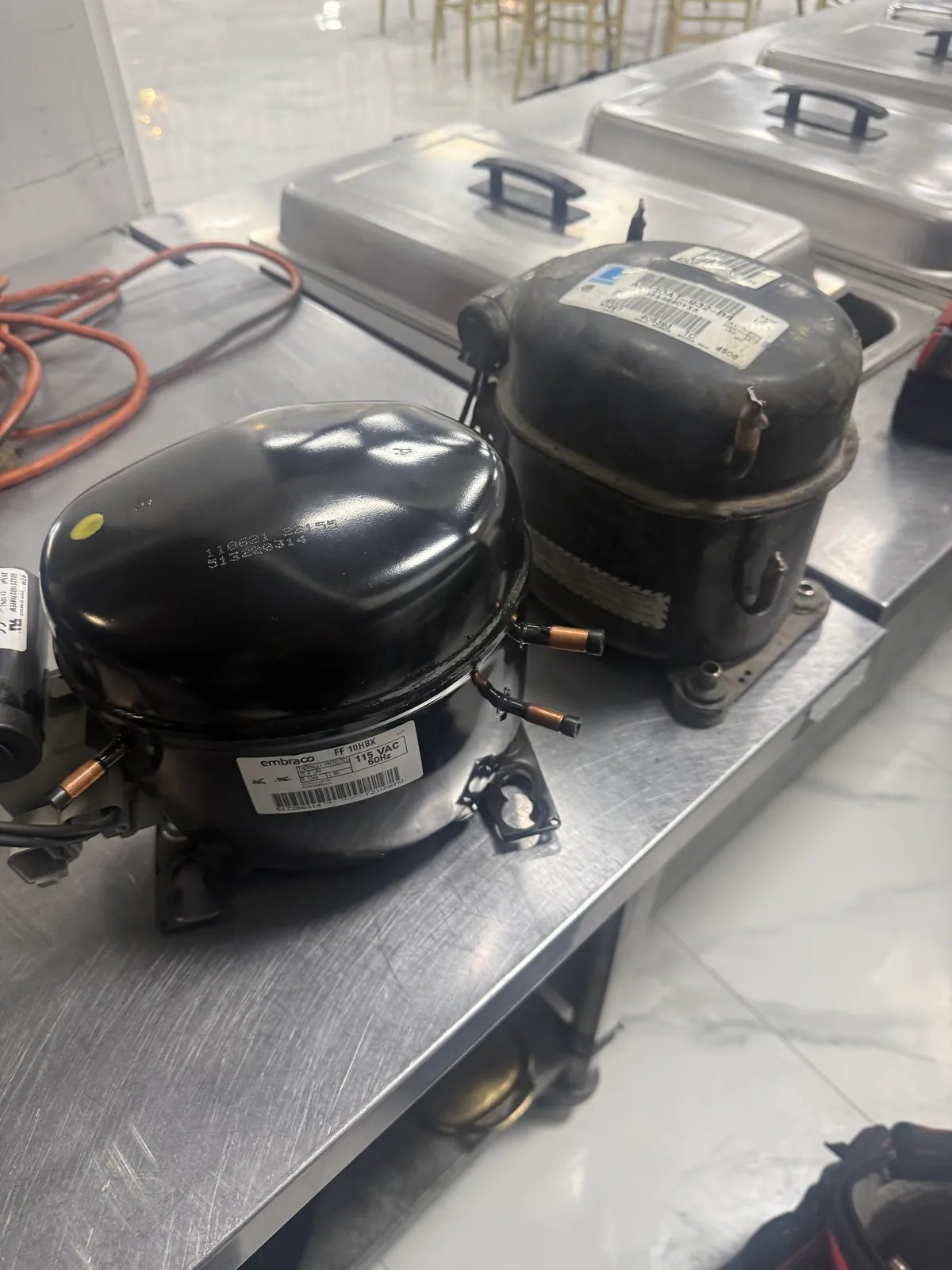
Listen to your equipment. A compressor or rack that switches on and off rapidly, trips its breaker, or runs continuously without ever satisfying the setpoint is a system under stress. Short-cycling is hard on the compressor — the single most expensive component in the system — and it is often a warning of a control problem, a charge issue, or a part on its way out. Catching it early can be the difference between a modest repair and a compressor replacement.
Refrigerant is not consumed, so a low charge always means a leak. Simply adding more wastes money and refrigerant and violates federal rules — sealed-system work legally requires an EPA Section 608 certified technician to find the leak, repair it, and recharge to specification. If a compressor is short-cycling on a low charge, the real fix is the leak, not the refill.
4. Energy bills that keep climbing
Your utility bill is a diagnostic tool most operators ignore. When refrigeration is dirty, low on charge, leaking air through bad gaskets, or fighting an iced coil, it runs longer and pulls more power to hold the same temperature. A cooling system does not use more electricity for no reason. If your bill is trending up and your hours and menu have not changed, the refrigeration is very often where that money is going — and it will keep going until the underlying fault is corrected.
Efficiency is not only an equipment question, either. Both ENERGY STAR and the U.S. Department of Energy point to clean coils, sound seals, and a correct refrigerant charge as what let a system actually deliver its rated efficiency. A neglected box quietly loses that efficiency months before it loses the ability to hold temperature — so a rising bill is often the very first symptom you can measure.
5. Condensation, sweating, or water on the floor
Excess moisture is a red flag. Sweating on the outside of a case, condensation dripping inside the box, or water pooling on the floor points to a drainage problem, failing door seals, or a humidity load the system is no longer managing. In South Florida’s climate that moisture load is relentless, so a refrigeration system that is falling behind on humidity is often the first to show it. Beyond the equipment risk, standing water is a slip hazard and a health-inspection problem.
The math on catching it early
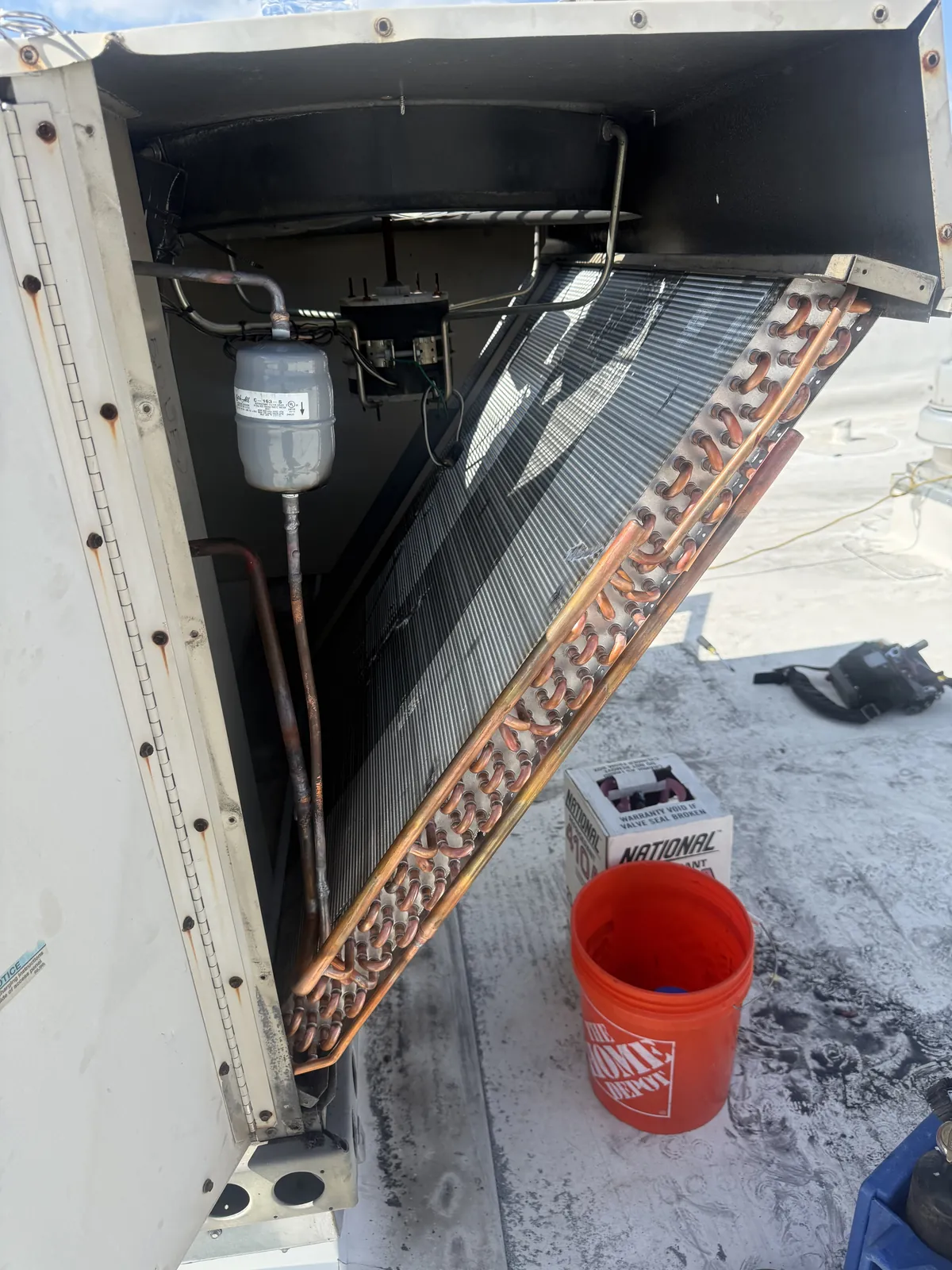
Every one of these signs is cheaper to address as a symptom than as a failure. A fouled condenser cleaned on a maintenance visit is routine work; the same condenser ignored until the compressor overheats and fails is a major repair plus a walk-in full of spoiled inventory plus the revenue you lose while the box is down. The operators who rarely have refrigeration emergencies are not lucky — they are on a preventive maintenance plan that catches these signals before they become a 2 a.m. phone call.
If you are seeing any of these five signs in a walk-in, reach-in, display case, or parallel rack system, it is worth a service call now rather than a breakdown later. Vice Mechanical services commercial refrigeration across Davie, Fort Lauderdale, and the wider South Florida area, and our emergency line is open 24/7 when something cannot wait. Call (786) 841-1011 or request service online.
- Temperatures slowly creeping up or slow to recover after door openings.
- Heavy, persistent ice or frost where it does not belong.
- A compressor that short-cycles, trips, or runs non-stop.
- Energy bills climbing with no change to your hours or menu.
- Condensation, sweating, or water pooling on the floor.