A cold front rolls through in January, the windows come open, and the AC sits silent for days. Most homeowners treat that silence as good news. Meanwhile, a long summer of wear still lives inside the system, waiting for April.
Winter AC maintenance South Florida homeowners schedule between November and March avoids the July scramble. Coils carry months of grime, drains hold algae, and electrical parts have weakened, yet nothing has failed. Technicians keep open calendars this time of year, so appointments land quickly and visits never feel rushed.
Why a Quiet South Florida Winter Can Hide Real AC Problems
South Florida systems work hard for most of the year. Compressors, fans, and capacitors log thousands of hours between April and October, and none of that wear disappears when temperatures drop. National Weather Service forecasters describe a winter dry season with only periodic cold fronts, so many systems never fully rest.
Hidden damage rarely shows symptoms in cool weather. A weak capacitor still starts the motor on a 72°F afternoon. Dirty coils still cool a house that only needs a few degrees of relief. Both parts fail the first time a heat wave demands full output.
Moisture adds a second layer of risk. EPA's guide to mold and moisture names moisture control as the key to preventing growth indoors. Condensate pans and drain lines collect algae and standing water during idle weeks, and a clogged drain can overflow the first warm weekend.
Winter inspections catch each of these problems while repairs stay small. A technician who finds a failing part in December replaces it on a normal schedule. Fail in July, and that same part becomes an emergency call.
What a Thorough Winter AC Tune-Up Should Cover in Your Home
A real tune-up goes beyond a filter swap and a quick glance at the thermostat. Ask what the visit includes before you book it. A thorough winter inspection covers five areas:
- Coil cleaning: Salt air, pollen, and dust coat the condenser and evaporator coils over summer, and cleaning them restores airflow so the compressor can run at normal pressures again.
- Condensate drain flush: Algae builds inside the drain line during humid months, and flushing it before spring prevents the clogs that cause overflow shutoffs and ceiling water stains.
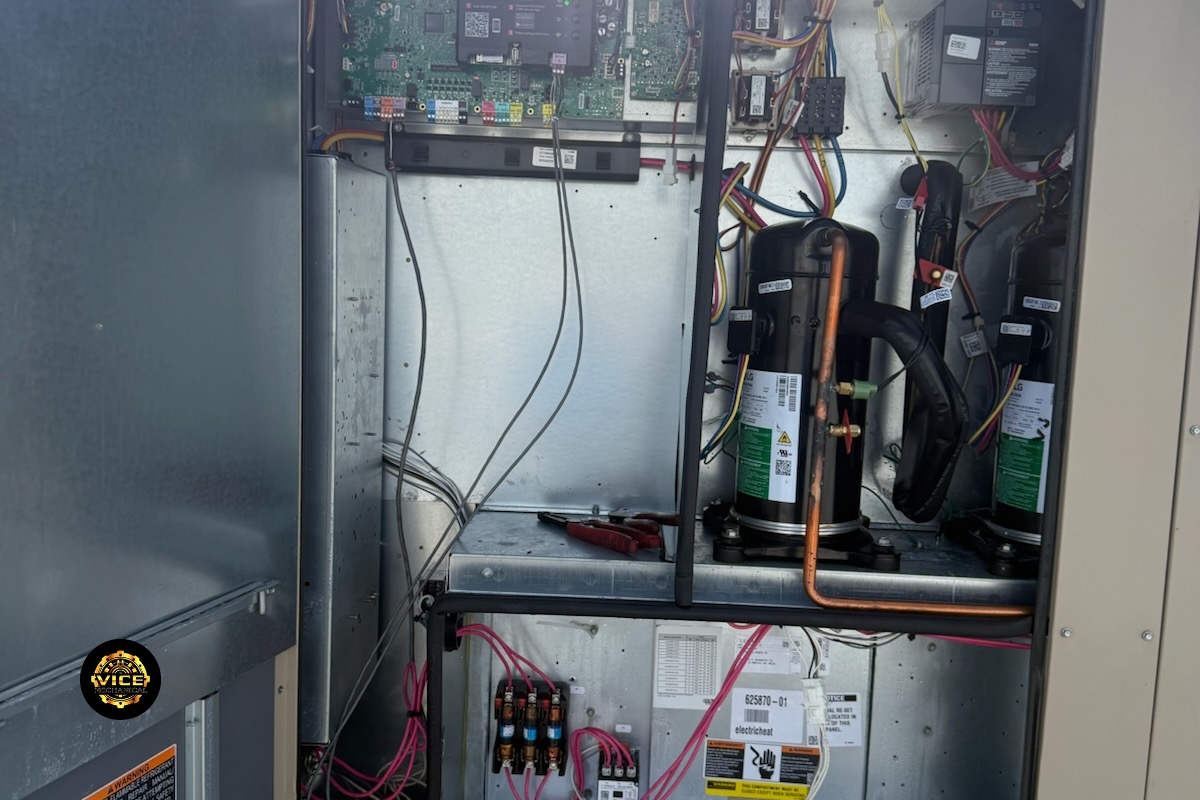
- Electrical component testing: Technicians measure capacitor values, contactor wear, and motor amp draw, because weak parts fail first when a system returns to heavy summer use.
- Refrigerant pressure and temperature split: Gauge readings and the temperature drop across the coil reveal slow leaks or low charge long before the system stops cooling.
- Airflow and duct inspection: Technicians check filters, blower speed, and visible ductwork for gaps, since leaks waste cooled air and push the system to run longer.
Federal guidance backs this approach. Department of Energy researchers publish air conditioner diagnostic and maintenance guidance that covers refrigerant charge and airflow checks. ENERGY STAR's maintenance checklist gives homeowners a simple way to track what has been done.
Heat Pump and Heat Strip Checks Before the Next Cold Front
Many South Florida homes rely on heat pumps or electric heat strips for the handful of cold mornings each year. Heating mode runs a different set of components than cooling, and most systems go months without using them. Nobody wants to learn about a failed heating element on the coldest night of the season.
Winter is the only time a technician can test heating mode under real conditions. Technicians check the reversing valve, measure amp draw on heat strips, and confirm that wiring and breakers handle the load. Overnight lows in the 40s or low 50s show up a few times each winter, so working heat matters.
A faint burning smell the first time heat runs each season is common, since dust settles on elements during idle months. Persistent odors, tripped breakers, or lukewarm air deserve a call. Refrigerant work must go through a technician with EPA Section 608 certification. Avoid anyone who offers to top off a system without gauges and credentials.
Why Winter Appointments Beat Waiting for a July Breakdown
Scheduling matters more than most homeowners expect. Summer brings the longest waits of the year, and a failed system in August often means days without cooling. Winter calendars open up, so you pick the day and the time window.
Parts availability improves as well. A technician who identifies a worn contactor or a weak capacitor in January orders and installs it without a rush. Replacement decisions also deserve calm. An aging system looks different on a quiet Tuesday than at 9 PM during a heat wave. Comparing options takes time you will not have in July.
Warranty protection adds another reason. Manufacturers often ask for proof of regular service before honoring a claim, so a dated inspection report in your files helps. Vice Mechanical builds maintenance plans that put visits on the calendar automatically, which removes the chance of forgetting.
Business owners face the same timing logic. Our commercial HVAC contractor guide covers how to choose a company for an office or restaurant. See the commercial refrigeration maintenance schedule for how scheduled visits work.
What Homeowners Can Safely Handle Between Professional Visits
Homeowners can handle a few tasks between visits. Replace or wash the filter every month or two, since a clogged filter chokes airflow and freezes coils. Keep two feet of clear space around the outdoor unit, and trim shrubs before they crowd the fins.
Watch the drain line. A trickle of water at the outdoor termination during a cooling run means the line flows freely. No water on a humid day deserves a closer look.
Leave refrigerant, electrical panels, and coil cleaning to professionals. Pressure washing a coil bends the fins and pushes debris deeper, and DIY refrigerant work violates federal rules. Small mistakes here create expensive repairs.
Set the thermostat sensibly too. Fan on auto lets the coil drain between cycles, and a steady setpoint avoids the short cycling that wears out compressors.
Warning Signs Worth a Call Even When the Weather Stays Cool
Cooler weather masks problems that would stand out in summer. Weak airflow from the vents, ice on the refrigerant lines, and water near the air handler all point to a failing component. Rising electric bills with no change in use often signal a system working harder than it should.
Odd sounds deserve attention. Grinding, rattling, or a loud hum from the outdoor unit usually means a failing motor or loose part. Short cycling, where the system starts and stops every few minutes, strains the compressor and shortens its life.
Humidity tells its own story. Rooms that feel sticky while the thermostat reads normal suggest the system is cooling without dehumidifying properly. Musty smells point to moisture trapped in the drain pan, ductwork, or air handler.
Turn the system off and call a technician when you see ice or standing water. Running a frozen coil or flooded pan can turn a small repair into a compressor replacement.
How Often South Florida Homes Need Professional AC Service
Plan winter AC maintenance South Florida systems can rely on as the main yearly visit. A second, lighter check in late summer helps homes with pets, heavy dust, coastal exposure, or older equipment. Homes with newer inverter systems often need less, but they still need clean coils and clear drains.
Frequency depends on how hard the system works. Rental properties and homes with large families run equipment longer each day, so they gain more from two visits. Vacation homes that sit empty need a different plan, since stagnant water and closed-up humidity create their own issues.
Ask your technician for a recommendation based on what the inspection shows. Honest answers sound specific, such as "your coils need cleaning every six months." Vague pitches about "peace of mind" tell you nothing.
AC Repair in Hollywood, Fort Lauderdale, and Nearby Cities
Homeowners searching for AC repair Hollywood FL or AC repair Fort Lauderdale find dozens of options that look identical online. Vice Mechanical serves Broward County, including both cities. Coastal neighborhoods face salt exposure that corrodes outdoor coils, while inland homes deal with more dust and construction debris.
Local conditions shape the winter checklist. Condenser coils near the beach need closer inspection for corrosion, and older homes in established neighborhoods often have duct leaks in attics. A technician who works these neighborhoods daily recognizes the patterns quickly.
Winter logic applies farther north and south too. Anyone comparing AC repair Boca Raton or AC repair Miami providers should ask identical questions: license number, proof of insurance, written estimates, and a clear service area. Confirm that a company covers your address before you book.
Our service areas page lists every Broward city Vice Mechanical covers. Check it before you call so you know whether we cover your neighborhood.
Choosing a Winter AC Maintenance Partner in South Florida
Pedro Javier Pereira Jr. founded Vice Mechanical LLC. He holds Florida certified air conditioning contractor license CAC1824947. Vice Mechanical installs and services split systems, ductless mini-splits, inverter systems, package units, and ductwork for homes across Broward County. Learn more about our team.
Book winter AC maintenance South Florida homes need before the first heat wave arrives. Call (786) 714-5586 or request service online to schedule a visit. Pick a morning appointment, and ask for a written report afterward.
Keep that report with your home records. Future technicians read it to see what changed, and buyers like seeing a documented service history. A simple folder or phone photo works fine.
Frequently Asked Questions
When is the best time for AC maintenance in South Florida?
Winter, from November through March, works best because systems sit mostly idle, technicians have open schedules, and any needed parts arrive before summer demand strains supply.
Do I need AC maintenance if my system rarely runs in winter?
Idle systems still collect dirt, algae, and wear from summer. A winter visit finds weak parts and clogged drains before they cause a breakdown.
What does a winter AC tune-up include?
Coil cleaning, a condensate drain flush, electrical testing, refrigerant and airflow checks, and a heating mode test on heat pumps, followed by a written findings report.
How much does AC maintenance cost in South Florida?
Pricing varies by system type, size, and visit scope, so request a written quote first. A single tune-up typically costs far less than one summer emergency repair.
Does Vice Mechanical service homes in Hollywood and Fort Lauderdale?
Vice Mechanical serves homes and businesses across Broward County, including Hollywood and Fort Lauderdale. Call (786) 714-5586 to confirm availability for your address.